
Best Practices
Email Marketing
Personalization

How to build an effective email segmentation strategy

Yosef's avatar Yosef | May 30, 2026
how to send personalized videos in hubspot 1 1
Yosef's avatar Yosef | May 30, 2026

Email segmentation has been a foundational marketing discipline for two decades. The standard advice is to break the audience into segments based on demographics, behavior, and lifecycle stage, then send each segment a tailored message. The discipline works. It also has a ceiling. Segments still receive the same message inside the segment, which produces the same broadcast experience the customer was supposed to escape. The brands producing the strongest results have moved past segmentation as the final personalization layer and into segmentation as the layer that informs personalized creative.

This piece walks through how to build an effective email segmentation strategy in 2026, what the highest-leverage segment types are, and how to combine segmentation with personalized video so the segment becomes a decision input rather than a creative endpoint. Production data from brands like Wyndham, Macy’s, Live Nation VIP, Habit Burger Grill, and Cleveland Cavaliers grounds the playbook.

Why does email segmentation still matter?

Segmentation matters because broadcast email is operationally efficient and creatively inadequate. A single message to a million subscribers can be sent at low marginal cost, but the engagement metrics are flat because the message cannot speak to the variation across the audience. Segmentation introduces variation by splitting the audience into groups whose responses are more uniform inside the group than across the audience.

The discipline still produces measurable lift. According to Litmus research on email segmentation, segmented campaigns produce open rates 14% higher and click rates 100% higher than broadcast campaigns. The lift is real, even before personalization is added on top.

The ceiling of segmentation alone is the homogenization inside each segment. A million subscribers split into ten segments produces ten broadcasts. The customer inside any given segment still receives the same email as everyone else in that segment. The personalization layer underneath segmentation is what produces the further lift.

What are the highest-leverage segment types in 2026?

The five segment types below consistently produce measurable lift across the customer base.

  1. Behavioral recency segments. Customers who engaged in the last 7 days, 30 days, 90 days, and over 90 days behave differently and should receive different campaigns. Recency is the single highest-leverage segmentation variable for most categories.
  2. Loyalty tier segments. Customers at different tiers have different relationships with the brand. The communication should reflect the tier, including the proximity to the next tier where applicable.
  3. Journey stage segments. Awareness, consideration, decision, retention, and advocacy each call for different messaging. Brands with structured journey detection produce sharper segmentation than brands that infer stage from a single behavioral signal.
  4. Predictive propensity segments. Customers scored by likelihood to convert, churn, refer, or upgrade. The scores produce probabilistic segments that perform better than rules-based segments because they reflect actual response likelihood.

5. Channel preference segments. Customers who respond to email, SMS, push, in-app, or web differently. The segment informs which channel the next message uses, not just what the message contains.

How do you combine segmentation with personalized video?

The pattern that produces the strongest results uses segmentation as a decision input rather than a creative endpoint. The segment determines who receives the campaign, when, and through which channel. The personalized video layer produces creative that adapts to each individual customer inside the segment.

The architectural advantage is that the brand does not have to produce a separate creative for each segment. The same Dynamic Master Template adapts to the customer’s data, regardless of which segment they fall into. The segment informs the trigger and the audience. The template informs the experience. The customer receives a message that reflects both their segment and their individual data.

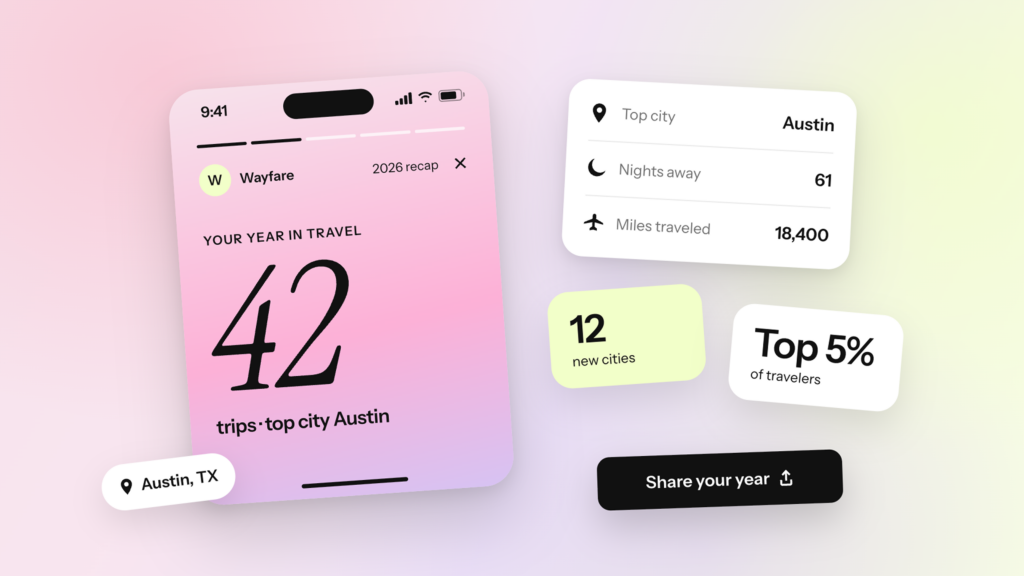
This is how Wyndham structured its year-end recap. Members were segmented by loyalty tier, but the recap itself was a single personalized video template that adapted to each member’s specific stays, points, and tier progression. The result was a 75% lift in email click-through rate. See the Wyndham year-end recap case study.

For more on the architectural foundation, see AI video personalization in 2026: why architecture matters more than the algorithm.

What does segmentation in production look like?

Macy’s segmented Star Rewards members by tier and recent purchase pattern, then shipped personalized mid-year recaps that reflected each member’s specific activity. The campaign produced a 47% conversion lift. See the Macy’s mid-year recap case study.

Live Nation VIP segmented fans by VIP tier (Silver, Gold, Diamond) and language preference (English, Spanish), then delivered personalized Trilogy Tour video calibrated to each segment-level combination. The campaign produced a 17.55% lift in unique opens and a 16.6% share rate. See the Live Nation VIP case study.

Habit Burger Grill segmented customers by order history and location, then delivered personalized loyalty communications that recognized each customer’s relationship with the brand. The campaign lifted loyalty membership signups by 47%. See the Habit Burger Grill case study.

Cleveland Cavaliers applied predictive propensity segmentation to fan engagement campaigns and let AI select the optimal CTA per segment in real time, producing a 2x conversion lift. See the Cleveland Cavaliers AI CTA case study.

How granular should segmentation be?

Most brands run six to twelve standing segments. Fewer than four misses important differences across the audience. More than twenty creates segmentation complexity that is hard to operationalize. The right number depends on the brand’s audience size, the personalization depth in the creative layer, and the operational capacity of the marketing team.

The personalization layer underneath segmentation allows for shallower segmentation than the classical advice would suggest. A brand running personalized video does not need fifty segments to deliver one-to-one experiences. Ten segments with personalized creative inside each produces richer customer experience than fifty segments with broadcast creative inside each.

What data do you need for effective segmentation?

The data requirements are smaller than most teams expect. Most brands already hold enough data in the CRM to support six to ten meaningful segments.

  • Identity data: name, email, location, language preference
  • Behavioral data: recency of last engagement, frequency of engagement, monetary value, recent product interaction
  • Loyalty data: tier, points balance, tier proximity, redemption history
  • Journey data: signup date, time since last purchase, current journey stage
  • Predictive data: propensity scores, churn risk, LTV estimate, next-best-action prediction

The fifth category is the highest-impact addition for brands ready to move beyond rules-based segmentation. The predictive scores produce probabilistic segments that perform better than the static rules most brands rely on today.

How do you measure segmentation strategy performance?

The measurement framework looks at three layers. Segment-level metrics: how each segment responded to each campaign, broken out by open, click, conversion, and downstream LTV. Cross-segment comparison: which segments produce the strongest response and which are underperforming. Strategy-level metrics: how the overall segmentation approach moves the brand’s headline numbers compared to broadcast or single-segment baselines.

The strategy-level metric matters most. A segmentation strategy that produces visible activity inside each segment but does not move the brand’s aggregate conversion or retention numbers has produced motion without progress. The fix is usually in either the segment definitions or the creative layer underneath.

FAQ

How often should I revisit my segmentation strategy? Most brands review the segment definitions quarterly and the predictive models monthly. The segments themselves evolve as the customer base grows and behavioral patterns shift.

Does segmentation require a customer data platform (CDP)? No. Most brands run segmentation directly off the CRM. A CDP becomes useful when customer data is scattered across multiple sources that need unification.

How does Blings consume segmentation data? The segment label is passed as a parameter on the Live URL alongside other personalization variables. The Dynamic Master Template can adapt to the segment, the individual customer’s data, or both.

What is the typical lift from moving from broadcast to segmented personalized video? Production data shows 40% to 100% lift in open rates and 50% to 200% lift in click-through rates, depending on category and segment design.

How do I avoid over-segmenting? Measure the aggregate response. If adding a new segment produces no measurable lift on the brand’s headline metrics, the segment is likely too granular. Consolidate.

The takeaway

Email segmentation is a foundational discipline that still produces real lift, but the ceiling sits where the creative layer underneath segmentation becomes the next constraint. The brands producing the strongest results use segmentation as a decision input that informs trigger logic and channel selection, then apply personalized video underneath so the creative inside each segment adapts to each individual customer. Wyndham, Macy’s, Live Nation VIP, Habit Burger Grill, and Cleveland Cavaliers all show what segmentation plus personalized video can produce when the architecture supports both.

Segmentation alone produces double-digit lift. Segmentation paired with personalized video produces lifts that single-digit segments cannot reach. The investment in the segmentation strategy compounds when the creative layer is built to take advantage of it.

Talk with a video expert now to see what you can accomplish.
Schedule Call