
Case Studies
Customer Stories
(QSR) Quick Service Restaurants
Retail
Website

Dynamic video abandoned cart flows: visualizing what customers left behind

Yosef's avatar Yosef | Aug 5, 2026
Dynamic video abandoned cart flows
Yosef's avatar Yosef | Aug 5, 2026

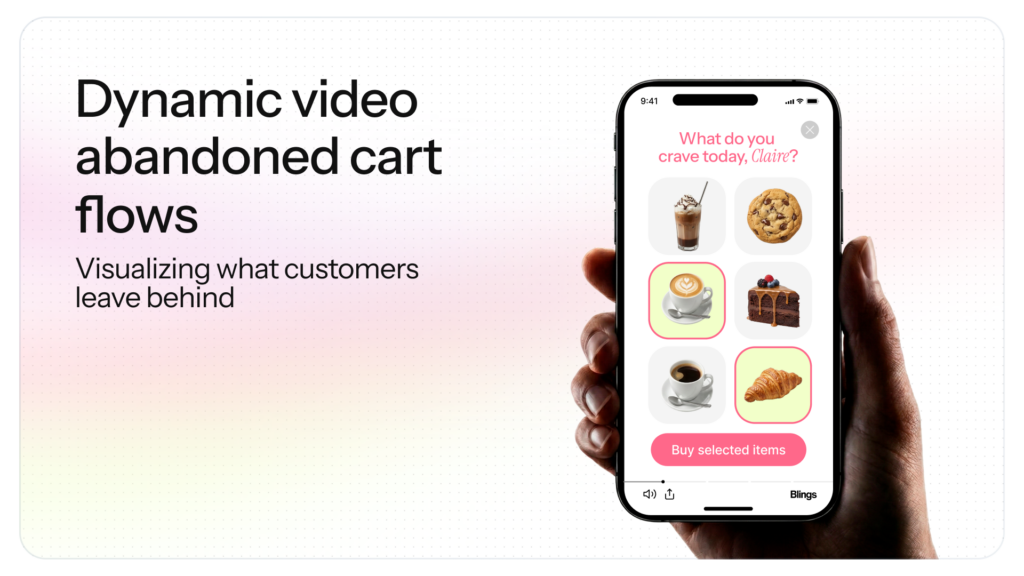
The standard abandoned cart email is a wasted opportunity. “You left items in your cart” is a text reminder that describes what the customer already knows and shows them nothing. The customer built a cart of specific things they wanted, and the recovery message reduces that desire to a line of text. Dynamic video abandoned cart flows do the opposite: they pull the actual images of the exact items the customer left and render them into a personalized, high-converting video that rekindles the desire by showing it.

This piece walks through how to build a dynamic video abandoned cart flow for retail, why visualizing the cart beats describing it, and the architecture that makes it work. It draws on production data from Habit Burger Grill, Macy’s, and Cleveland Cavaliers.

What is a dynamic video abandoned cart flow?

A dynamic video abandoned cart flow is an automated recovery sequence that, instead of sending a text reminder, dynamically pulls the images of the exact items a customer left in their cart and renders them into a personalized video with a path back to checkout. It shows the customer what they left behind rather than describing it.

The mechanic is direct. The customer abandons a cart. The flow fires. It reads the specific SKUs in the cart, pulls their product images, and assembles a personalized video showing those items, rendered to look desirable, with the customer’s name and a one-tap return to checkout. The recovery message becomes a visual reminder of exactly what the customer wanted.

Why does visualizing the cart beat a text reminder?

Visualizing the cart beats a text reminder because desire is visual, not verbal. The customer added those items because they wanted them, and seeing them again reactivates that want in a way a text description cannot. A line reading “you have 3 items in your cart” carries none of the appeal that drove the original intent; a video showing those three items, styled and desirable, carries all of it.

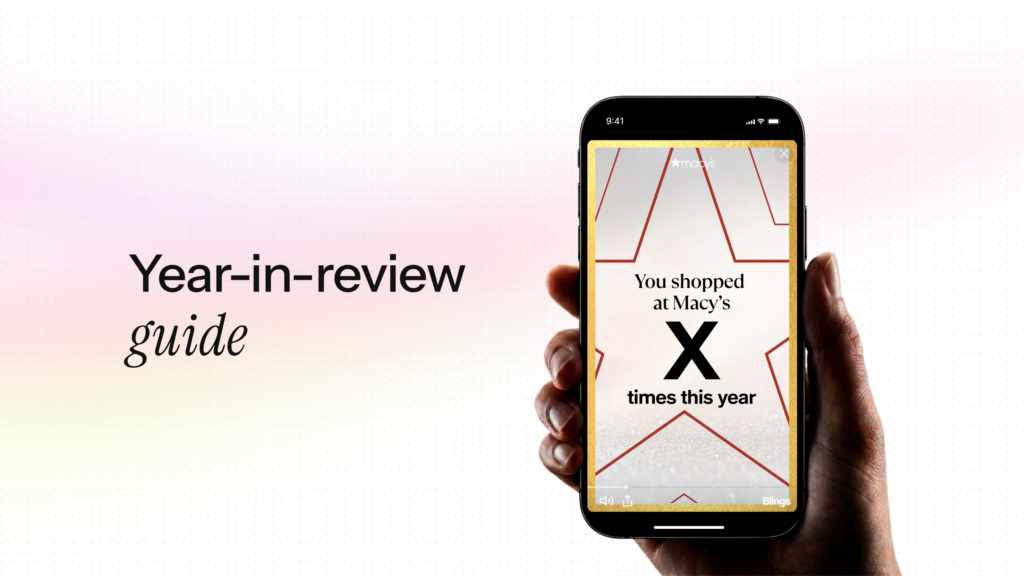
The recognition also signals attentiveness. The customer sees that the brand knows exactly what they chose, which makes the recovery feel helpful rather than generic. Habit Burger Grill built its personalized video on this exact-item recognition and lifted loyalty signups by 47%. See the Habit Burger Grill case study. Macy’s produced a 47% conversion lift with personalized recap video tied to each customer’s specific activity. 

How does the flow pull the exact item images?

The technical heart of the flow is dynamic asset pulling. Dynamic asset pulling means the video reads the specific items in the customer’s abandoned cart and retrieves their product images from the catalog at the moment of open, so the video always shows the customer’s actual cart rather than a generic template. Each recovery video is unique to the customer’s cart because it is built from the customer’s cart.

The flow connects to the e-commerce platform and CRM, reads the abandoned cart contents, maps each item to its catalog image, and renders those images into the personalized video. Because the assembly happens at the moment of open, the video reflects the true cart even if the customer’s cart or the catalog changed since abandonment. For the integration architecture, see AI video personalization in 2026: why architecture matters more than the algorithm.

What makes the recovery video convert?

Three elements drive the conversion. The exact-item visualization rekindles the desire. The in-video call to action removes the friction of returning to checkout. And optional personalized urgency, a live countdown on a completion incentive, adds a reason to act now.

The Cleveland Cavaliers proved the power of an optimized in-video CTA, driving a 2x conversion lift when AI selected the best call to action per viewer. See the Cleveland Cavaliers AI CTA case study. Applied to cart recovery, the same in-video CTA returns the customer directly to their cart, collapsing the distance between rekindled desire and completed purchase.

What architecture makes exact-cart video possible?

Rendering a video of each customer’s specific, just-abandoned cart is impossible with pre-rendered files, because every cart is unique and fresh. The video has to assemble from the customer’s live cart data.

On-demand rendering means the recovery video assembles on the customer’s device at the moment of open, pulling the exact cart contents and product images from current data, so the video always shows what the customer actually left. The approach runs on MP5 technology through a single Dynamic Master Template connected to the e-commerce platform and CRM. For the architecture, see the MP4 is dead.

FAQ

What is a dynamic video abandoned cart flow?
A dynamic video abandoned cart flow is an automated recovery sequence that pulls the images of the exact items a customer left in their cart and renders them into a personalized video with a path back to checkout, instead of sending a generic text reminder. It shows the customer what they left rather than describing it.

Why does a video abandoned cart email convert better than text?
A video converts better because desire is visual. Seeing the exact items again reactivates the want that drove the original intent, which a text line describing the cart cannot do. The visual recognition also signals the brand’s attentiveness.

How does the video pull the exact items from the cart?
Through dynamic asset pulling: the video reads the specific items in the customer’s abandoned cart and retrieves their product images from the catalog at the moment of open, so the video shows the customer’s actual cart rather than a generic template.

What makes an abandoned cart recovery video convert?
Three elements: exact-item visualization that rekindles desire, an in-video call to action that removes checkout friction, and optional personalized urgency such as a live countdown on a completion incentive.

The Takeaway

The standard abandoned cart email describes what the customer left; a dynamic video abandoned cart flow shows it. By pulling the images of the exact items and rendering them into a personalized, desirable video with a one-tap return to checkout, the flow rekindles the visual desire that drove the original intent. Habit Burger Grill, Macy’s, and Cleveland Cavaliers all show what exact-item personalization and strong in-video CTAs produce.

The retail brands that visualize the abandoned cart will recover the desire their competitors reduce to a text reminder. Showing what the customer wanted beats describing it, and the architecture that assembles the exact cart on demand is what makes it possible.

Talk with a video expert now to see what you can accomplish.
Schedule Call

Your customers are waiting for great video experiences.

Schedule a custom demo