Comparison
Entertainment
Sports
Email

Personalized video vs dynamic images: when to use each

Yonatan Schreiber's avatar Yonatan Schreiber | Oct 20, 2026
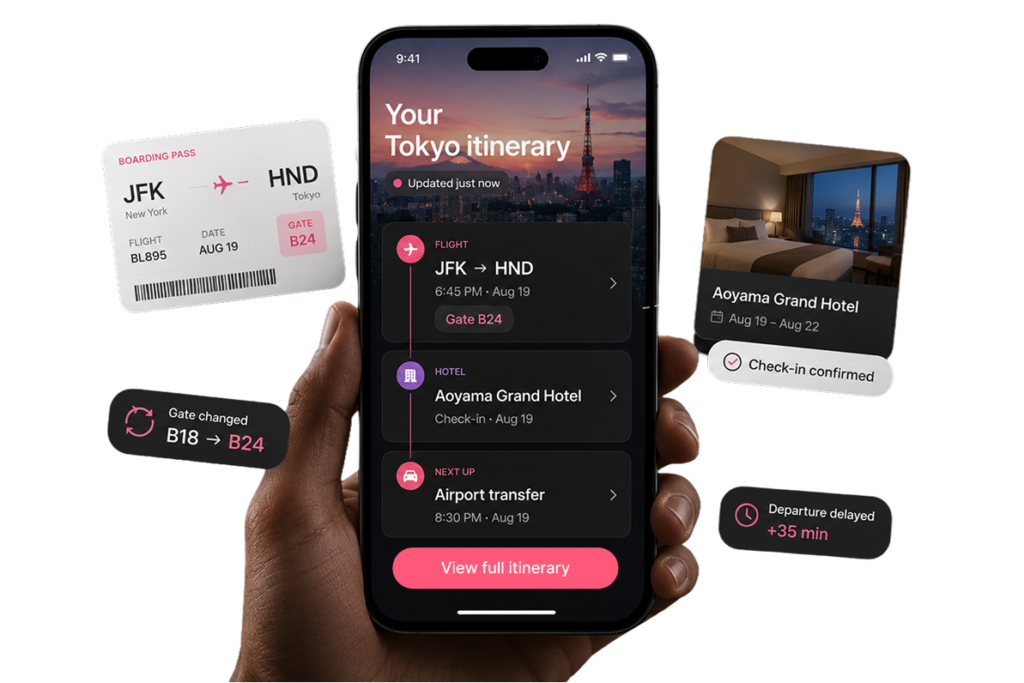
Travel vertical graphic showing a smartphone with real time itinerary cards.
Yonatan Schreiber's avatar Yonatan Schreiber | Oct 20, 2026

Dynamic images and personalized video are often pitched as competitors, but they are better understood as different tools for different jobs. A dynamic image swaps in a personalized element, a name, a countdown, a product, at the moment of open. Personalized video does the same but as a full moving, interactive experience. Both have a place, and the honest answer to “which should I use” is that it depends on what the moment calls for. This guide lays out where dynamic images suffice, where personalized video wins, and how the two work together.

An even-handed comparison for marketers weighing the two. It draws on production data from Live Nation VIP, Wyndham, and Cleveland Cavaliers.
What is the difference between dynamic images and personalized video?

A dynamic image is a still image that personalizes one or more elements at the moment of open, such as inserting the recipient’s name, a live countdown, or a specific product, rendered fresh when the email is viewed. It is lightweight, fast, and effective for single-variable personalization.

Personalized video is a full moving, often interactive experience that assembles from the customer’s data at the moment of open, expressing many variables across scenes and inviting the viewer to tap, choose, and respond. It carries more information and more emotional weight than a still image, at the cost of being a richer asset.

The distinction is depth. A dynamic image personalizes a moment; personalized video personalizes an experience. Which one fits depends on how much the moment needs to carry.

When do dynamic images suffice?

Dynamic images suffice when the personalization is simple and the goal is a fast, single-variable touch. A countdown timer in a promotional email, a name in a header, a single recommended product, a live inventory count, these are moments where a still image does the job cleanly and loads instantly. If the personalization is one variable and the message is simple, a dynamic image is often the right, efficient choice.

Dynamic images also fit high-frequency, low-stakes sends where a full video would be more production than the moment warrants. A routine reminder with a personalized detail does not need a cinematic experience; it needs a fast, relevant touch.

When does personalized video win?

Personalized video wins when the moment carries emotional weight, multiple variables, or a need for interaction. A year-in-review recap, a loyalty milestone, an onboarding welcome, an abandoned-cart recovery showing multiple items, a fan season wrap-up, these are moments where the richness of video produces engagement a still image cannot.

The data shows the gap at these high-value moments. Live Nation VIP produced a 16.6% share rate and 82 seconds of average watch time on a 40-second personalized video, engagement a still image does not generate. See the Live Nation VIP case study. Wyndham produced a 75% CTR lift and a 66.7% in-video survey completion rate, the interactivity being something only video delivers. See the Wyndham case study. Cleveland Cavaliers drove a 2x conversion lift with interactive personalized video. See the Cleveland Cavaliers case study.

How do dynamic images and personalized video work together?

The two are complementary, not mutually exclusive. A smart program uses dynamic images for the high-frequency, single-variable touches and personalized video for the high-value, emotionally weighted moments. The dynamic image handles the routine countdown reminder; the personalized video handles the year-in-review. Together they cover the full range of personalization needs at the right cost for each moment.

The shared architecture makes this practical. Both render at the moment of open from the customer’s current data, so a brand running on an on-demand platform can deploy either as the moment calls for, from the same data foundation. For the architecture, see AI video personalization in 2026: why architecture matters more than the algorithm.

FAQ

What is the difference between a dynamic image and personalized video?

A dynamic image personalizes one or a few elements of a still image at the moment of open, such as a name or countdown. Personalized video is a full moving, often interactive experience that expresses many variables across scenes. The difference is depth: an image personalizes a moment, video personalizes an experience.

When should I use a dynamic image instead of video?

Use a dynamic image when the personalization is simple and single-variable, such as a countdown or a name, and the send is high-frequency or low-stakes. A still image loads instantly and does the job cleanly when the moment does not need the richness of video.

When is personalized video worth it over a dynamic image?

Personalized video is worth it when the moment carries emotional weight, multiple variables, or a need for interaction, such as a year-in-review, loyalty milestone, or abandoned-cart recovery. These are moments where video produces engagement a still image cannot.

Can you use both dynamic images and personalized video?

Yes, and the strongest programs do. Use dynamic images for high-frequency single-variable touches and personalized video for high-value emotionally weighted moments. Both render on demand from the same customer data, so they work together from one foundation.

The takeaway

Dynamic images and personalized video are complementary tools, not competitors. Dynamic images suffice for fast, single-variable, high-frequency touches; personalized video wins where the moment carries emotional weight, multiple variables, or interaction. The strongest programs use both, matching the tool to what the moment needs, from a shared on-demand data foundation. Live Nation VIP, Wyndham, and Cleveland Cavaliers show what personalized video produces at the high-value moments where it earns its richness.

Do not choose one tool for every moment. Use the dynamic image for the routine touch and the personalized video for the moment that matters, and let the shared architecture make both easy to run.

Your customers are waiting for great video experiences.

Schedule a custom demo