
Customer Experience
6 customer engagement ideas to stimulate any customer loyalty program | Blings.io
 Yosef | Nov 29, 2024
Every interaction with a customer has the potential to either strengthen brand loyalty or drive them away. The old script is not working anymore. The classic approach to customer loyalty programs is under real pressure, and the brands winning right now are the ones who recognized that first.
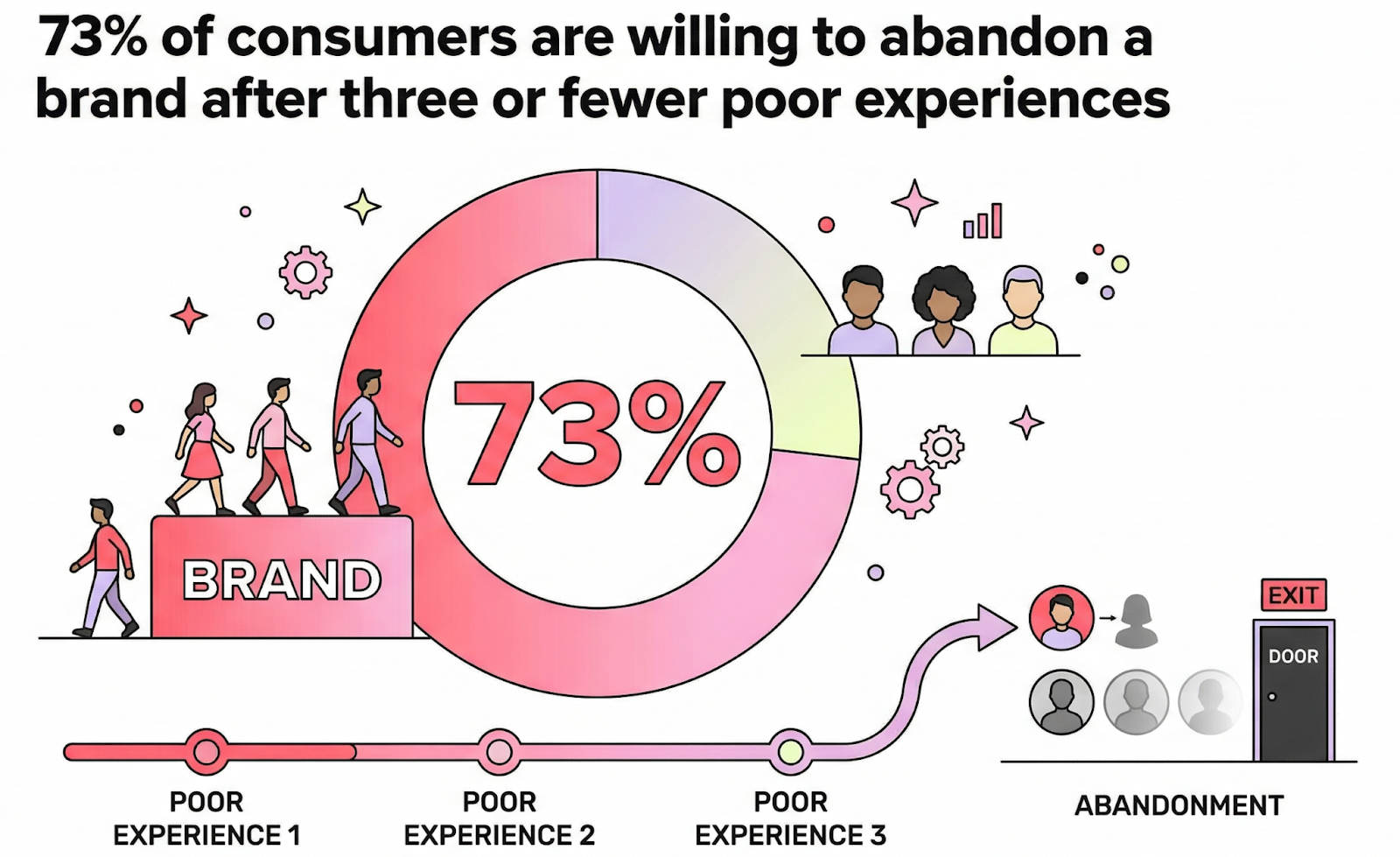
73% of consumers are willing to abandon a brand after three or fewer poor experiences. That is not a margin of error. That is an existential signal. Businesses that treat loyalty programs as a transactional points ledger are leaving significant lifetime value on the table. The ones gaining ground are building programs around genuine, personalized engagement at every stage of the customer journey.
This post outlines six concrete strategies to move your loyalty program beyond the basics and into something customers actually want to participate in.
Why customer engagement is the foundation of loyalty
Customer engagement covers every interaction a customer has with your brand: not just the moment of purchase, but the full arc of their relationship with you. When that arc is built on meaningful, personalized touchpoints, it produces emotional connections that compound over time into repeat purchases, higher lifetime value, and genuine brand advocacy.
Modern consumers are not just looking for discounts. They are looking for experiences that feel relevant to them. Revamping your loyalty program with strategies like gamification, community building, and personalized video marketing can transform a static points system into an active part of the customer relationship.
6 customer engagement strategies to strengthen your loyalty program
Customer engagement covers every interaction a customer has with your brand: not just the moment of purchase, but the full arc of their relationship with you. When that arc is built on meaningful, personalized touchpoints, it produces emotional connections that compound over time into repeat purchases, higher lifetime value, and genuine brand advocacy.
1. Gamify the customer journey
Game mechanics work because they tap into something fundamental: people respond to progress, recognition, and competition. Introducing these elements into your loyalty program turns routine interactions into motivated behavior.
Badge and leaderboard systems reward customers for specific accomplishments: frequent purchases, high engagement levels, or creative product use. A health and fitness app, for example, could award achievement badges and publish a monthly ranking of its most active users, giving others a concrete goal to work toward.
Video contests and user-generated content add a participatory layer. Inviting customers to submit content featuring your product, and rewarding the best entries with perks or public recognition, builds both engagement and social proof. McDonald’s executed this well by partnering with Blings to create an interactive trivia experience. Users engaged with the content for the chance to be featured on the McDonald’s Instagram page, which reinforced brand loyalty while generating organic reach.
Knowledge quizzes are another low-friction entry point. A quiz tied to your product or industry, with a reward attached to completion, turns passive customers into active participants. The reward does not need to be large. The act of engagement is what builds the habit.
2. Leverage social media challenges
A well-structured social media challenge can generate brand awareness, user-generated content, and community energy simultaneously. The key is alignment: the challenge must feel native to your brand’s values, not like a trend you are chasing.
A home décor brand running a #HomeMakeoverChallenge, for instance, can ask followers to share before-and-after images using its products. Featuring the best submissions on the brand’s platforms closes the loop: participants feel recognized, and the brand gains authentic content that carries more credibility than anything produced in-house.
The practical takeaway here is structure. Define the mechanic, the reward, and the end date before launch. An open-ended challenge with no clear stakes rarely generates momentum.
3. Build a brand community
A loyalty program with a community attached to it operates at a different level than one that does not. Community creates a sense of belonging that no discount can replicate.
This does not require a proprietary platform. A dedicated channel on an existing network can be enough to establish a space where loyal customers connect, share knowledge, and receive exclusive access. Behind-the-scenes content, early product previews, and member-only webinars are all credible ways to signal that membership carries real value.
A beauty brand that hosts a forum where customers share skincare routines and product recommendations, for example, generates durable engagement through peer-to-peer interaction. The brand becomes the context for the conversation, which is a far stronger position than being the sender of a weekly promotional email.
4. Create personalized customer experiences
Customers do not experience your brand as a segment. They experience it as individuals. Treating them accordingly is no longer a differentiator. It is the baseline expectation.
The operational starting point is segmentation based on behavior and preference. From there, you can tailor messaging and offers to match what each customer has actually demonstrated they care about.
An e-commerce platform has a clear example of this at scale. Purchase history data can drive personalized email journeys that surface relevant product recommendations at the right moment in the customer lifecycle. The result is a communication that feels considered rather than broadcast.
The principle applies across channels. The more precisely you can match your message to the individual’s context, the more likely that message is to convert and to reinforce loyalty.
5. Develop or update your loyalty app
A loyalty app that only tracks points is a missed opportunity. The most effective versions of these apps function as a personalized channel in their own right.
A loyalty app that only tracks points is a missed opportunity. The most effective versions of these apps function as a personalized channel in their own right.
Consider what a fashion retailer can do when its app allows users to visualize how items fit before purchasing. Every interaction generates behavioral data. That data informs personalized recommendations and dynamic reward structures that update in real time. The app stops being a utility and becomes a reason to engage.
The key capabilities to prioritize:
– Augmented reality product visualization to reduce purchase hesitation
– Tailored shopping journeys that adapt based on individual user behavior
– Dynamic rewards management that reflects real-time activity, not static tiers
Each of these features reduces friction at a different stage of the experience. Together, they make the app worth returning to.
6. Deploy interactive, personalized video
Customers today are processed through more video content than any previous generation. The opportunity for loyalty programs is not to add more video to that stream. It is to make the video feel like it was made for the specific person watching it.
Personalization at the content level means weaving in details that belong to the individual viewer: their name, their purchase history, their current loyalty points balance, a live countdown to a reward expiration. A viewer who sees their own data reflected in a Dynamic Master is not watching a campaign asset. They are receiving a communication addressed directly to them.
Interactive elements extend that engagement further. When viewers can click, browse, and make choices within the content itself, the experience shifts from passive consumption to active participation. That shift correlates directly with stronger purchase intent and higher retention: research shows interactive video formats drive 3x higher purchase intent than standard video, and retention rates increase by up to 50% when viewers engage with interactive elements.
Real-time data integration is what makes this viable at scale. A platform that connects securely to your CRM can adapt offers and messages dynamically, based on where each viewer is in their journey at the exact moment they engage. The content stays current without requiring a new production cycle for every campaign update.
The technology stack behind these strategies
Execution at scale requires the right infrastructure.
| Tool category | Role in the strategy |
|---|---|
| Customer engagement platforms | Automate and manage every customer interaction across channels |
| Data analytics tools | Track campaign performance using metrics like impressions and engagement, so you can concentrate resources on what is working |
| Interactive video platforms | Deliver personalized, interactive Dynamic Masters at scale with real-time data integration |
Choosing the right platform in each category matters. The goal is a stack that connects cleanly, shares data reliably, and removes the manual effort that typically creates bottlenecks between insight and action.
Putting this into practice with Blings
The strategies above share a common requirement: the ability to deliver personalized, dynamic content to individual customers at scale, without rebuilding your workflow every time a campaign changes. That is the specific problem Blings is built to solve.
Blings is a Universal Personalization Platform. Its patented MP5 technology powers On-Demand Generation directly on the viewer’s device, meaning each Live Asset is assembled in real time from the data your customer has already provided. You build the Dynamic Master once. Blings handles the personalization from there, across every channel where the Live URL is deployed: email, SMS, and beyond. Because the architecture is client-side, Blings never sees or stores your customers’ PII.
If your loyalty program currently relies on static content to reach a dynamic audience, that gap is worth closing.
Book a demo to try Blings today.