Video
6 simple steps to create a dynamic video | Blings.io
 Yosef | Dec 3, 2024
Consumers are processing content faster than ever. The question is no longer whether video belongs in your marketing mix. It’s whether your video is doing enough work to keep pace with what audiences now expect.
With brands competing for attention across every channel, format alone is no longer a differentiator. Personalization and interactivity are what separate a forgettable impression from a meaningful conversion. In fact, 71% of customers now expect tailored experiences. A dynamic Live Asset built around real customer data is one of the most direct ways to meet that expectation.
This post walks through six practical steps for building a dynamic video strategy: from goal-setting and audience research to choosing the right platform.
What is a dynamic video, and how does it work?
Dynamic videos display different content to different viewers based on behavior and customer data. What makes them dynamic is that they adapt automatically. The content shifts based on the data they can analyze, not just the viewer’s active choices.
The most common and effective application is personalization. A dynamic Live Asset can be customized with text, embedded images, audio, and narrative direction, all shaped by a viewer’s preferences, purchase history, and more.
Why dynamic video drives results
Personalization and interactivity do not just improve the viewing experience. They move business metrics.
- Conversion rates: Interactive videos are known to increase conversion rates by as much as 70%, often by integrating elements of the buying experience directly into the content.
- Viewing time: Personalization and interactivity keep viewers watching longer, which increases message retention and makes it easier to serve detailed content to leads further down the funnel.
- Customer trust: Personalized interactions signal that a brand understands its customers. That recognition builds loyalty at the individual level, not just the segment level.
Four ways to deploy dynamic video
1. Loyalty programs
Loyalty programs turn satisfied customers into active brand advocates. Dynamic video gives you the vehicle to deliver personalized rewards: new product previews, points summaries, or tailored recommendations that drive repeat engagement. Each viewer sees what is relevant to them, not a generic campaign blast.
2. User onboarding
For products with complex feature sets or a learning curve, a strong first experience is critical to long-term retention. Dynamic Live Assets can carry new users through the onboarding process with personalized content and interactive elements that surface the most relevant information at the right moment.
3. Customer retention
Dynamic video is an effective delivery mechanism for personalized offers and coupons. When you have an existing customer relationship and real-time CRM data, you can identify what each customer actually wants and tailor your outreach accordingly. The engaging nature of a dynamic Live Asset ensures those high-value offers get seen.
4. Customer engagement
Interactive features and personalization give marketers a scalable way to build content that speaks to specific audience segments. Features can be designed at the segment level, then personalization layers on top, so the message is relevant at every level of specificity.
Six steps to create a dynamic video
1. Plan your short- and long-term goals
Clear goals determine what to prioritize and which KPIs will measure success. Without them, content becomes unfocused: attempting several things at once and achieving none of them well.
Goals for dynamic video might include:
- Growing sales and conversion rates
- Increasing customer retention
- Boosting impressions and online engagement
- Building brand trust
- Improving satisfaction through onboarding and education
Any goal aligned with your broader marketing strategy is a valid starting point. You can also go more specific and target metrics like ROI or customer lifetime value. The key is to commit to a measurement framework before you build.
2. Conduct target audience research
With your goals defined, you can map your target audiences and understand the needs, interests, and pain points that drive their decisions. That research will shape every downstream content choice: titles, themes, interactive elements, and tone.
Consider how your audience discovers your brand. Whether the primary touchpoint is your website, social media, email, or a physical channel, that pattern should inform how and where you distribute your dynamic video. Nutter Butter’s chaotic TikTok presence may resonate with a new generation of consumers, but the same approach would not serve an enterprise B2B solution or a medical technology company. Audience research draws that line clearly.
3. Choose or create a template
Look for a platform that provides ready-made templates. There is no need to build every dynamic video from scratch. The right template library, organized by use case and format, can dramatically compress your content creation cycle and let you repurpose existing marketing assets into live, dynamic experiences.
Access to customizable, use-case-based templates means you can adapt to your market and business goals without starting over every time.
4. Plan your interactive and personalized elements
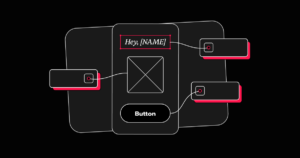
The interactive and personalized elements are what make a video dynamic. This planning step deserves careful attention. Map out the specific features and personalizations you want to include before you begin building.
Interactive elements can include:
- Buttons and calls to action
- Story branching options
- Chatbots
- Editable forms
Personalization can be direct or indirect. Platforms that support automated CRM integrations allow personalization to update in real time, so the viewer always sees data that reflects their current relationship with your brand. Think through your personalization strategy across the entire customer lifecycle, not just the first touchpoint.
5. Consider your data sources
A dynamic video is only as strong as the data behind it. Your CRM is the natural starting point, but it is worth auditing that data for accuracy and completeness before building content around it.
Look for data silos: website analytics, app behavior, and offline data that may not yet be connected to your primary data source. If the reliability of your current data is in question, consider different collection methods or reach out directly to customers through surveys and feedback requests. Garbage in, garbage out applies here as clearly as anywhere else in the stack.
6. Choose the right platform
Creating personalized, interactive video at scale is difficult and expensive without the right platform. The decision deserves a well-researched evaluation against your business goals and technical requirements.
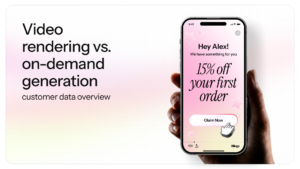
On-Demand Generation is a core capability to look for. It means each viewer’s experience is generated at the moment of viewing, not pre-rendered in bulk. This approach supports enterprise-scale deployment and eliminates the creative bottlenecks that come with traditional rendering workflows. Client-Side Architecture is equally important for security: it ensures that your customer’s personal data flows directly to their device, never through a third-party server.
Building relationships that last
Adding interactive and personalized elements to your video content drives measurable improvements in engagement and conversion. It does not have to be expensive or slow. With a clear strategy and the right platform, you can build content that adapts to each viewer and scales to your entire audience.
That is where Blings fits into the stack. As a Universal Personalization Platform, Blings uses Client-Side Architecture and On-Demand Generation to produce dynamic Live Assets at scale. No two viewers receive the same experience. Because generation happens on the user’s device, Blings never sees or stores your PII. The result: personalization at enterprise scale, with no data liability.
Book a Demo Today
Schedule Demo