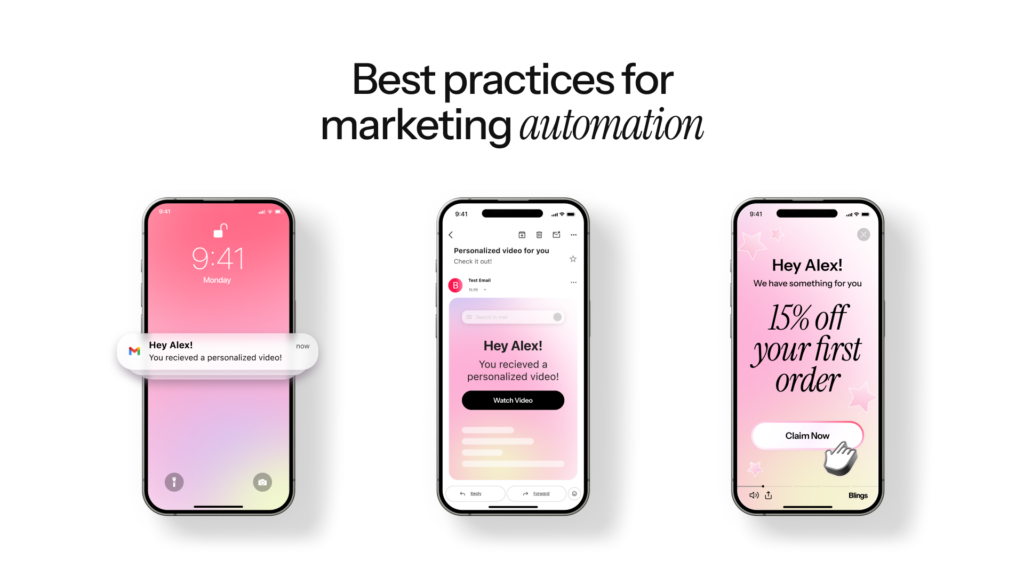
Four best practices for personalization at scale
These are the four practices that consistently separate top-performing programs.
1. Build the data layer first, the creative layer second
Most personalization programs are built creative-first: design a campaign, then go find the data to support it. The result is brittle, because every new campaign requires a new data conversation. The reverse pattern is to invest in a unified customer data layer (CRM, CDP, or both) that exposes the same fields to every channel. Once the data layer is consistent, every new campaign reuses the same identity, history, and behavioral signals.
Practical test: can your team launch a new personalization variable across email, in-app, and video without a new engineering ticket? If not, the data layer is the bottleneck.
2. Use templates that variate at runtime
The creative should be a template that reads from the data layer, not a finished asset that gets duplicated for each segment. Two patterns matter:
- Component-level variation. Hero image, product grid, CTA, and headline can each be controlled by a different field. A single template produces thousands of variants without manual work.
- Generation at runtime. The asset assembles when the customer engages, not when the campaign launches. MP5 technology is one example, generating personalized video on the recipient’s device at the Moment of Open with live data from the CRM. The output is a video that reflects the customer’s current state every time it is viewed, with no re-generation.
For more detail on why runtime generation changes the cost curve, see AI video personalization in 2026: why architecture matters more than the algorithm.
3. Orchestrate channels around the data, not the calendar
Most automation programs orchestrate by send schedule (welcome email Tuesday, push notification Wednesday, retargeting Thursday). The teams that scale orchestrate by signal: the action a customer takes triggers the next message, and the message itself reads the same data layer the trigger came from.
Three signals worth automating early:
- Behavioral triggers. Cart abandonment, page views, quiz completions, tier changes. The closer the message is to the trigger, the higher the conversion.
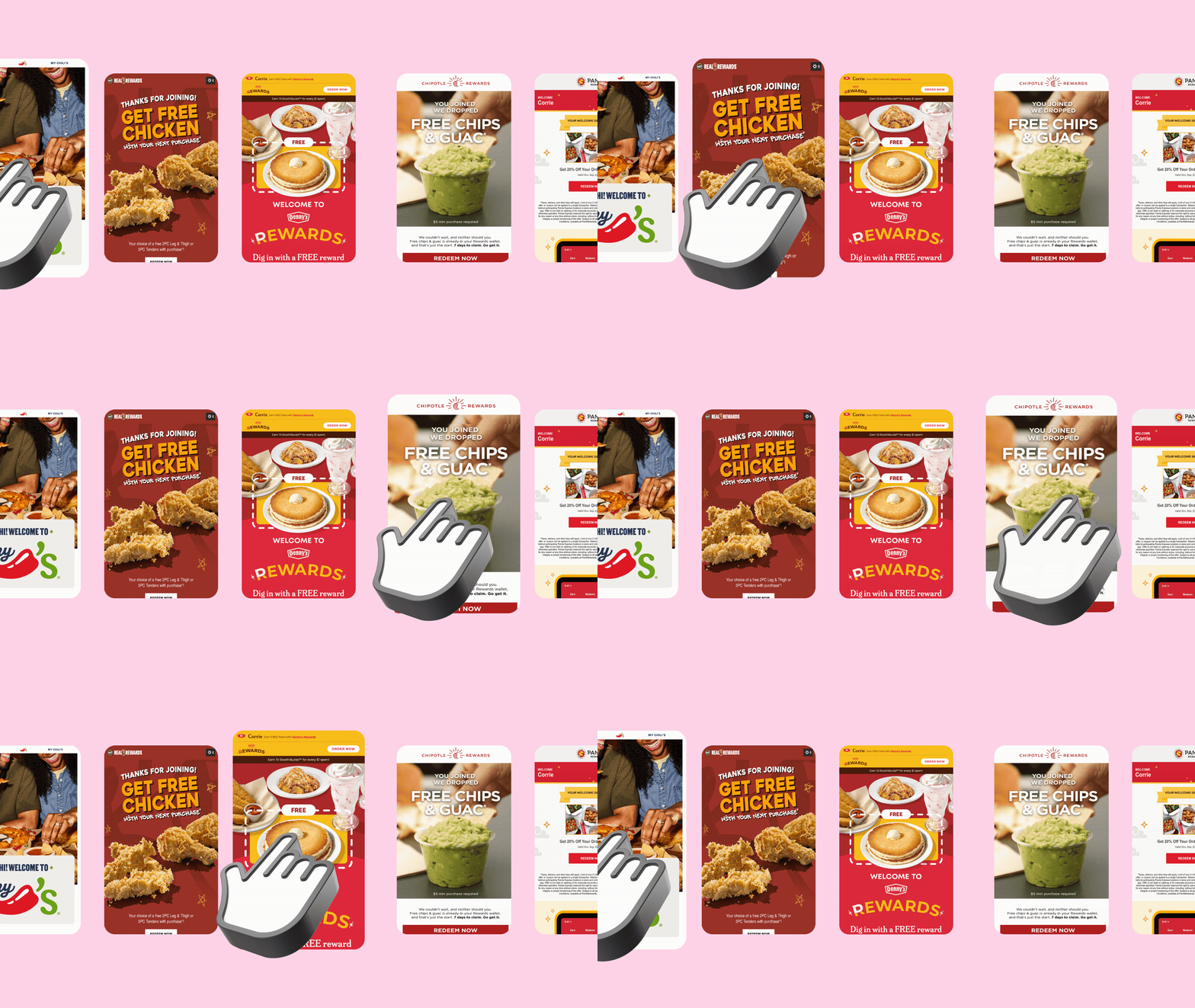
- Lifecycle transitions. Welcome, first purchase, milestone, at-risk, win-back. Each transition is a different audience even if the customer is the same person.
- Real-time data shifts. Loyalty balance crosses a threshold, inventory drops, an offer becomes available. Treat the data shift itself as a trigger.
4. Measure revenue per send, not open rate
Open rate is a leading indicator. Click-through rate is a leading indicator. Conversion rate is a leading indicator. Revenue per send is the trailing indicator that finance cares about, and it is the only metric that consistently correlates with whether the program is worth scaling.
Build a dashboard that tracks revenue per send for every flow and every broadcast, week over week. The metrics above it (open, click, conversion) are useful for diagnosing why a number changed, but the number that drives the budget conversation is revenue per send. According to Twilio Segment’s State of Personalization Report, 69 percent of businesses are increasing their personalization investment year-over-year, and the ones that justify the increase do it with revenue, not engagement metrics.