Best Practices
Customer Experience
Email Marketing
Personalization

Re-engagement strategies for lapsed customers

Corrie's avatar Corrie | Jun 1, 2026
Blings blog cover with a pink and lavender gradient and the title "Re-Engagement Strategies for Lapsed Customers"
Corrie's avatar Corrie | Jun 1, 2026

Every customer base contains a quieter group than the marketing dashboards advertise. The lapsed customers. The ones who signed up, engaged for a while, and then drifted. They are not unsubscribed, not churned in the contractual sense, just inactive. Most brands address this cohort with a discount and a “we miss you” subject line, then write off the non-responders. The math says they should not. Lapsed customers are usually the most cost-efficient audience a brand can re-engage, because the relationship already exists. The recapture cost per active customer is lower than the acquisition cost per new customer, often by significant multiples. The fix is not louder discounting. The fix is content that recognizes the relationship.

This piece walks through what an effective re-engagement program actually looks like, how brands like Wyndham, Habit Burger Grill, and Live Nation VIP have used personalization to bring lapsed audiences back, and the architectural choices that make the work sustainable.

Why do most re-engagement campaigns fail?

Most re-engagement campaigns fail because they treat the lapsed customer as if they were a cold prospect. The brand sends a discount offer, an account-status alert, or a re-introduction to the product. The customer either ignores it or unsubscribes. The brand’s response is to assume the customer is unrecoverable and reallocate the budget toward acquisition.

The misread is structural. A lapsed customer is not a cold prospect. They are a person who once knew the brand well enough to engage and then stopped. The reason they stopped is rarely that they forgot the brand existed. The reason is usually that the brand’s communications became indistinguishable from the rest of the inbox, the product moment that originally engaged them faded, or a competing option captured their attention. A discount cannot fix any of those.

According to Bain and Company research on the economics of loyalty, the cost of re-engaging a lapsed customer is typically one-fifth to one-seventh the cost of acquiring a new customer with equivalent lifetime value. The recoverable revenue is significant. The standard playbook leaves most of it on the table.

What does an effective re-engagement message look like?

The pattern that works has three properties. The message reflects the customer’s actual history with the brand, not a generic re-introduction. The message presents value the customer can act on without needing to make a discount-driven decision. The format is engaging enough that the customer is willing to spend a few seconds with it after months or years of disengagement.

Personalized video meets all three. The customer’s history populates the creative directly. The value presented is calibrated to what the customer used to engage with. The format requires a click rather than a discount-driven decision, which produces engagement without forcing the brand into a margin trap.

A personalized re-engagement video can show the customer their last purchase, their unredeemed rewards, the new product launches they missed, the tier benefits they earned but never used, or a forward-looking moment that reflects what they are most likely to want next. The content is built once as a Dynamic Master Template and renders per customer on demand through MP5 technology, which means the campaign can run continuously without per-customer production cost.

What does re-engagement look like in production?

Habit Burger Grill used personalized video tied to each customer’s order history and location to lift loyalty membership signups by 47%. The campaign reached both active and lapsed customers, with the personalization layer making the message relevant to where the customer was in their relationship with the brand. The full breakdown is in the Habit Burger Grill case study.

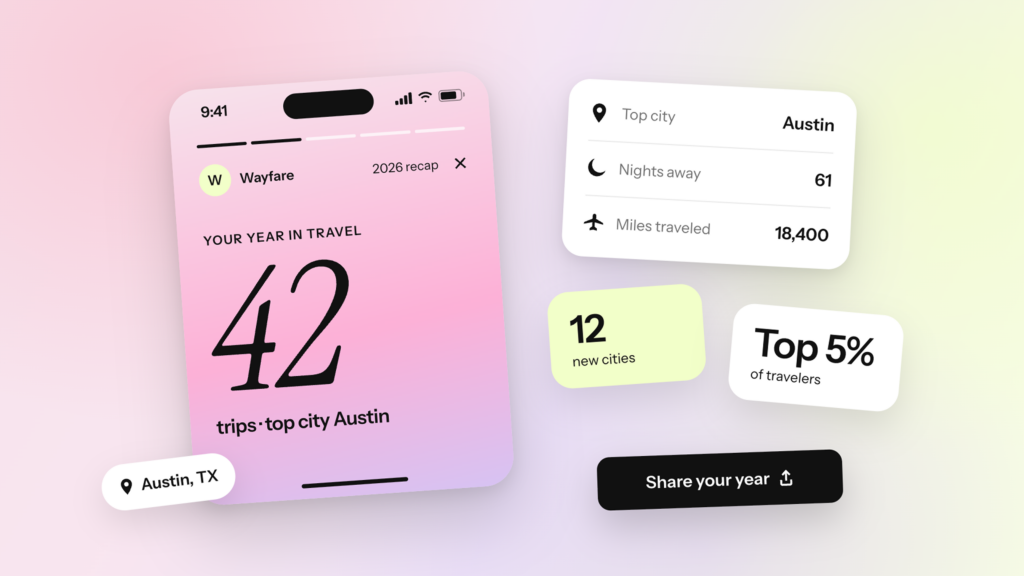
Wyndham ran an annual personalized year-end recap that recognized each loyalty member’s stays, points, and tier. The campaign reached members who had not engaged with standard loyalty emails for months, producing a 75% lift in email click-through rate and a 66.7% completion rate on the embedded survey. The recap format reactivated dormant members in a way that discount-driven emails had not. See the Wyndham year-end recap case study.

Live Nation VIP drove a 16.6% share rate on the Trilogy Tour personalized fan video, with significant participation from fans who had not engaged with monthly newsletters for extended periods. The personalization recreated the sense of recognition that the brand-fan relationship had been built on. See the Live Nation VIP case study.

What signals identify a lapsed customer?

The signals are different for each category, but most data warehouses already capture them.

  • Engagement signals: declining open rate, declining click rate, recent unsubscribe-adjacent behavior
  • Behavioral signals: drop in login frequency, drop in product usage, missed purchase cycles relative to historical pattern
  • Loyalty signals: unused rewards, expiring points, dormant tier status
  • Transactional signals: missed renewal, paused subscription, completed contract without renewal
  • Channel signals: response across one channel dropping while activity in another channel continues

The signal that matters most is the one that fires earliest. By the time a customer has unsubscribed, the recapture window has narrowed significantly. By the time they have stopped opening emails for three months, the cost of recapture is climbing. The most effective re-engagement programs fire on early signals, while the relationship is still live in the customer’s memory.

How do you sequence a re-engagement program?

The sequencing matters as much as the content. A re-engagement program that fires every message at once produces a single response window. A sequenced program produces multiple windows, each with a different angle. The pattern that consistently works has four steps.

Step one: the recognition moment. A personalized recap that reflects the customer’s history. No offer, no pitch, just acknowledgment that the brand remembers the relationship.

Step two: the value reminder. A short follow-up that surfaces unused benefits, expiring rewards, or product features the customer never used. Still personalized. Still anchored on the customer’s data.

Step three: the forward-looking moment. A nudge toward a specific next action that reflects what the customer is most likely to want. Tier-progression visibility, an event invitation, a product recommendation tied to recent behavior in other channels.

Step four: the explicit invitation. If the previous three did not produce response, an explicit re-engagement offer or a clean exit. The offer should be calibrated to the customer’s segment, not a universal discount. The exit should be honest: ask whether the customer wants to keep hearing from the brand, and respect the answer.

The fourth step protects the brand’s email reputation. Customers who explicitly opt out from a respectful exit do less damage to inbox provider scores than customers who silently disengage and eventually mark messages as spam.

What architecture supports continuous re-engagement?

The architecture that supports re-engagement at scale has three properties. The trigger logic fires automatically when the lapsed signal appears, rather than requiring a manual campaign run. The Dynamic Master Template adapts to the customer’s specific history without per-customer production. The engagement loopback feeds responses back into the CRM so future re-engagement decisions improve over time.

The Blings platform handles the second and third properties. The Dynamic Master Template renders on demand through MP5 technology, which means the same template can serve every lapsed customer with content tailored to their data. The engagement events flow back to the connected CRM (Salesforce, HubSpot, Braze, Iterable, Klaviyo) through native integrations, which means the trigger logic in the customer engagement platform can incorporate the new response signal.

For more on how the rendering and integration layers work together, see AI video personalization in 2026: why architecture matters more than the algorithm.

How do you measure re-engagement program performance?

The measurement framework looks slightly different from standard campaigns because the success signal is reactivation, not immediate conversion. The metrics that hold up over time include reactivation rate (the percentage of lapsed customers who return to active engagement within 60 days), recovered LTV (the lifetime value recaptured from reactivated customers), reactivation cost (the marketing investment per reactivated customer), and downstream retention rate (how long reactivated customers stay active before lapsing again).

The fourth metric matters most. A re-engagement program that reactivates customers who lapse again within 90 days has produced motion but not progress. The pattern usually indicates that the underlying disengagement cause was not addressed. The fix is in the broader retention program, not in the re-engagement messaging.

What does a healthy lapsed-customer cohort look like?

A healthy lapsed-customer program produces three observable patterns. The reactivation rate sits in the 8% to 25% range, depending on the lapse depth and the relationship category. The recovered LTV per reactivated customer matches or exceeds the LTV of a comparable new customer. The downstream retention curve for reactivated customers tracks within 10% to 20% of the curve for never-lapsed customers, indicating that the reactivation produced a real return rather than a temporary motion.

Brands publishing the strongest results across these patterns share a common architectural choice: personalized creative anchored on real customer history, delivered through on-demand rendering, with engagement signals feeding back to the CRM. The brands that try to run re-engagement on batch-and-blast templates produce single-digit reactivation rates and the same customers lapsing again the following quarter.

FAQ

How long should I keep emailing a lapsed customer before stopping? Most teams use a 90-day to 180-day re-engagement window, with explicit opt-out offered in the final message. The window depends on the typical purchase cycle for the category.

Should I offer a discount in re-engagement campaigns? Sometimes. A discount-first approach trains customers to wait for discounts. A recognition-first approach with a discount in step four if needed produces better long-term economics.

How does Blings support re-engagement programs? The platform powers the personalized video creative inside the re-engagement sequence. The Dynamic Master Template renders per customer on demand, with engagement events flowing back to the CRM for trigger logic updates.

What is the typical reactivation rate for personalized video re-engagement? Production data across the customer base shows reactivation rates two to four times the rate of standard discount-driven re-engagement emails.

Can re-engagement work for B2B customers? Yes. The mechanic transfers. The data spine shifts toward usage, engagement, and account-team interactions instead of purchase frequency, but the underlying recognition principle applies.

The takeaway

Lapsed customers are the most economically efficient audience most brands ignore. The recovery cost is multiples lower than acquisition. The relationship already exists. The barrier is usually that the brand’s standard re-engagement playbook treats lapsed customers as cold prospects rather than as people who once engaged. The fix is personalization anchored on real history, delivered through an architecture that does not require per-customer production. Wyndham, Habit Burger Grill, and Live Nation VIP all show what happens when re-engagement is built on recognition rather than discount.

The teams that take re-engagement seriously usually find that the recovered revenue rivals what their acquisition programs produce, at a fraction of the cost. The architecture is what makes that sustainable.

Talk with a video expert now to see what you can accomplish.
Schedule Call