


By now, we’ve all seen it: attention spans are shrinking. But the real story is not that people are paying less attention. It’s that they’re processing faster. Especially Gen Z, who grew up immersed in short-form, swipeable content. They expect relevance in seconds, or they’re gone.
In 2026, video marketing has to meet this moment. Personalization, once a luxury, is now the baseline. And with new tools, data strategies, and creative formats emerging, brands that adapt will thrive.
From Demographics to Data Signals
The next generation of personalized video isn’t about targeting broad segments. It’s about responding to real-time data signals: location, behavior, preferences, and even predicted intent. Instead of guessing what a viewer wants to see, brands are letting the data decide.
Spotify Wrapped remains a prime example. It’s not just personalized, it’s participatory. Users share it because it reflects who they are. The same goes for Nike’s “You Can’t Stop Us” campaign, which combined personalization with high-impact editing and motion design to connect at both an emotional and individual level.
Beyond the Play Button: Making Video Functional
2026 won’t be about video views. It will be about video utility.
Brands are embedding actions directly into their video content. Shoppable moments, appointment booking, live polls, or even updating user info inside the video frame. We’ve already seen companies like Amazon experiment with interactive trailers, and Shopify explore video storefronts. The line between video and product is blurring.
AI Makes Personalization Faster (But Not Always Better)
Generative AI is now capable of creating video scripts, AI text to speech, and visual assets in minutes. That speed is reshaping the creative workflow, allowing teams to iterate quickly and test multiple versions of the same campaign.
But the challenge is still human: how do you maintain brand consistency, protect user privacy, and avoid personalization that feels creepy or robotic? The winners in 2026 will be those who use AI to scale thoughtfully, without losing the storytelling craft.
The Rise of Data-Aware Creative Teams
Creative and marketing teams are no longer siloed from analytics. Tools like Adobe’s Firefly, Canva’s Magic Studio, and Vyond are making it easier to create dynamic assets, while platforms like HubSpot, Braze, and Iterable feed in the behavioral data to shape them. The future of creative is not just imaginative, it’s data-literate.
So, What’s Next?
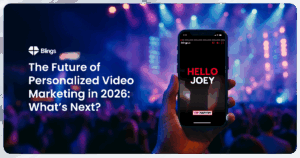
As video becomes more dynamic, interactive, and personalized, brands will need new infrastructure to keep up. One emerging solution is Blings, which uses patented HTML-based video (MP5) to generate real-time personalized video experiences across email, web, and mobile. Unlike traditional MP4s, these videos can respond to CRM data, allow in-video interactions, and scale to millions without breaking.
Whether you’re looking to improve onboarding, increase retention, or drive loyalty, smart video is becoming the default language of digital communication.
Curious how this works?