Best Practices
Personalization

Why Personalization Is the Secret to Long-Term Customer Engagement

Yosef's avatar Yosef | Feb 2, 2026
Why personalization is the secret
Yosef's avatar Yosef | Feb 2, 2026
Channels
Email
Mobile

In a world of “infinite scroll” and inbox fatigue, the modern consumer has developed a subconscious filter for generic marketing. When every brand is shouting, the only voice that breaks through is the one that calls the customer by name—and actually knows what they like.

Customer engagement personalization is no longer just a “nice-to-have” feature; it is the fundamental engine of long-term loyalty. Here is why tailoring your message is the secret to keeping customers for years, not just clicks.

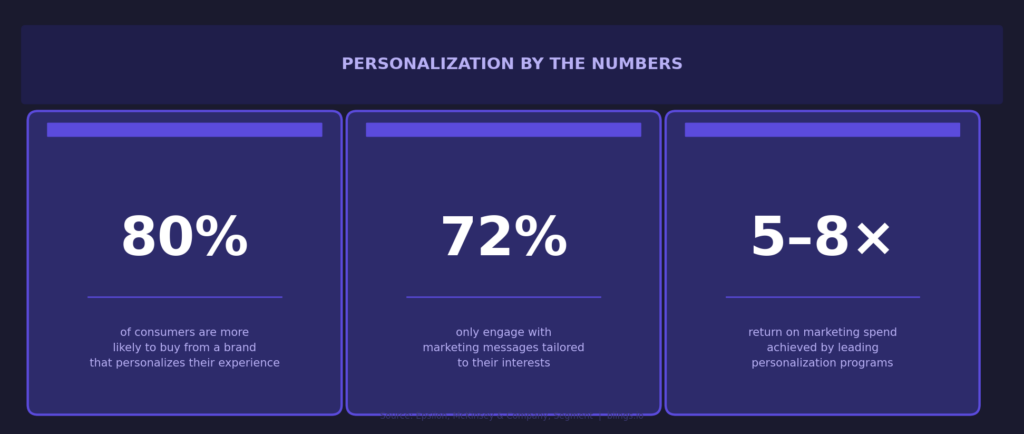
The data is clear: 80% of consumers are more likely to buy from a brand that personalizes their experience, and 72% only engage with marketing messages tailored to their interests. Leading personalization programs generate 5 to 8 times the return on marketing spend. The gap between brands that personalize and those that do not is widening every year.

Here is what this post covers:

  • Why personalization moves customers from one-time buyers to long-term advocates
  • How to reduce decision fatigue and increase conversion through tailored experiences
  • Why video personalization at scale is now achievable without a massive production budget
  • How zero-party data builds trust in a privacy-first world
  • How to measure the ROI of your personalization program
Personalization by the medium


Moving from “Transaction” to “Relationship”

Most marketing is transactional: “We have a product; you should buy it.” Personalization flips the script to: “We saw you liked X, so we tailored Y just for you.”

When you use data to personalize content, you move away from being a vendor and toward being a curator. High-performing brands are now using hyper-personalization to show customers they are not just a row in a spreadsheet. This emotional connection is the bedrock of long-term customer loyalty.

The distinction matters because relationships compound over time. A customer who feels known and understood is not merely loyal to your product—they become an advocate for your brand. That word-of-mouth impact is nearly impossible to buy with a standard ad budget.

What separates transactional marketing from relationship marketing:

  • Primary goal: Transactional marketing chases the single conversion. Relationship marketing builds lifetime value.
  • Message: Transactional sends one-size-fits-all blasts. Relationship marketing tailors content to individual behavior and preferences.
  • Data use: Transactional relies on broad demographic segmentation at best. Relationship marketing uses real-time, individual-level signals.
  • Customer perception: Transactional brands are easy to replace. Personalized brands create an emotional switching cost that competitors struggle to overcome.
  • Churn risk: Generic experiences drive churn. Personalized experiences drive retention.

“Personalization at scale is not about sending more messages. It is about sending the right message, in the right format, to the right person, at exactly the right moment.”

Reducing Decision Fatigue

The “Paradox of Choice” is real. When a customer lands on a generic catalog with hundreds of undifferentiated options, they often choose nothing at all. Decision fatigue causes them to abandon the journey before it even begins.

By utilizing multi-action landing pages that adapt based on user history, you remove the friction of choice. Instead of making the customer search for what they want, you present the solution on a silver platter. This reduction in friction is a primary driver of customer engagement.

How personalization reduces friction at every funnel stage:

  • Awareness: Serve content that aligns with a user’s demonstrated interests, cutting through the noise of an overcrowded feed.
  • Consideration: Surface the two or three most relevant products or plans, rather than overwhelming the prospect with the full catalog.
  • Conversion: Pre-fill forms, recall cart history, and display social proof that reflects the user’s specific use case.
  • Retention: Trigger contextual re-engagement messages based on behavior, such as dormancy signals or milestone anniversaries.
  • Advocacy: Identify highly engaged customers and route them toward referral programs or loyalty rewards at the moment of peak satisfaction.

Each reduction in friction is a compounding gain. When a customer does not have to work to find value, they return more often—and each return reinforces the habit of engaging with your brand.

Personalize the medium

Static images and text are easy to ignore. Video is not. However, traditional video is expensive and nearly impossible to scale across a diverse customer base. This is where the shift to MP5 technology changes everything.

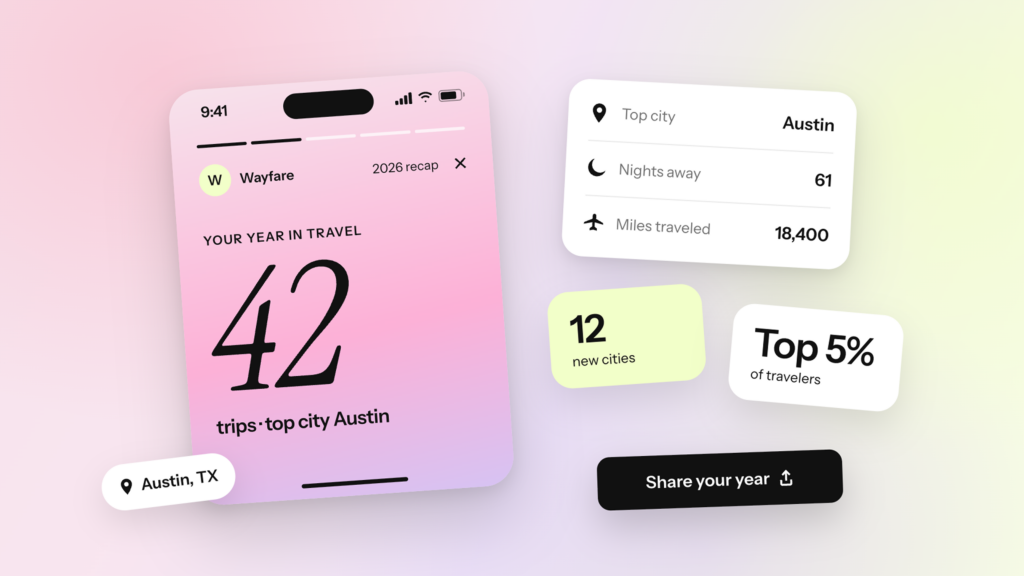
Imagine sending a video that is not a generic ad, but a dynamic live asset where the product colors, names, and pricing change in real-time based on the viewer’s profile. Each customer receives a unique experience generated on demand, directly on their device. This feels like a 1-on-1 conversation at the scale of millions.

Key performance advantages of personalized video:

  • Higher open rates: Subject lines like “Your personalized summary” consistently outperform generic alternatives. Personalized video routinely drives 26% or more lift in open rates.
  • Increased dwell time: People watch longer when the content is directly relevant to their situation. Personalized video achieves 2 to 3 times the average view duration of standard campaigns.
  • Better retention: Customers feel understood, which lowers churn. When a brand demonstrates it knows your history and preferences, the emotional switching cost increases significantly.
  • Measurable lift in conversions: Dynamic calls-to-action tailored to the viewer’s stage in the customer lifecycle outperform static CTAs across every industry vertical.

Building Trust through Zero-Party Data

In an era of strict privacy laws, trust is currency. Third-party cookies are gone. Regulatory pressure continues to tighten. Brands that built their personalization engines on borrowed data are now scrambling to rebuild from scratch.

The smarter path is zero-party data: information that customers share willingly, in exchange for a better experience. By asking customers for their preferences and then immediately using that data to improve their journey, you create a genuine value exchange.

Why zero-party data outperforms every alternative:

  • It is accurate: Customers tell you directly what they want, rather than having you infer it from proxy signals that may be wrong.
  • It is consented: You have an explicit record of the customer choosing to share, which satisfies GDPR, CCPA, and emerging global privacy frameworks.
  • It is durable: Unlike third-party data that expires with a cookie policy change, preferences customers share remain valid until they update them.
  • It deepens the relationship: The act of asking a customer what they prefer signals respect. Customers who see their input reflected in the experience are more likely to continue sharing.

When customers see that sharing their preferences leads to a better, more personalized journey (rather than just more spam) they are more likely to stay engaged. This privacy-first marketing approach is essential for SOC 2 compliant brands looking to build 2026-ready loyalty.

Final Thought: The Loyalty Loop

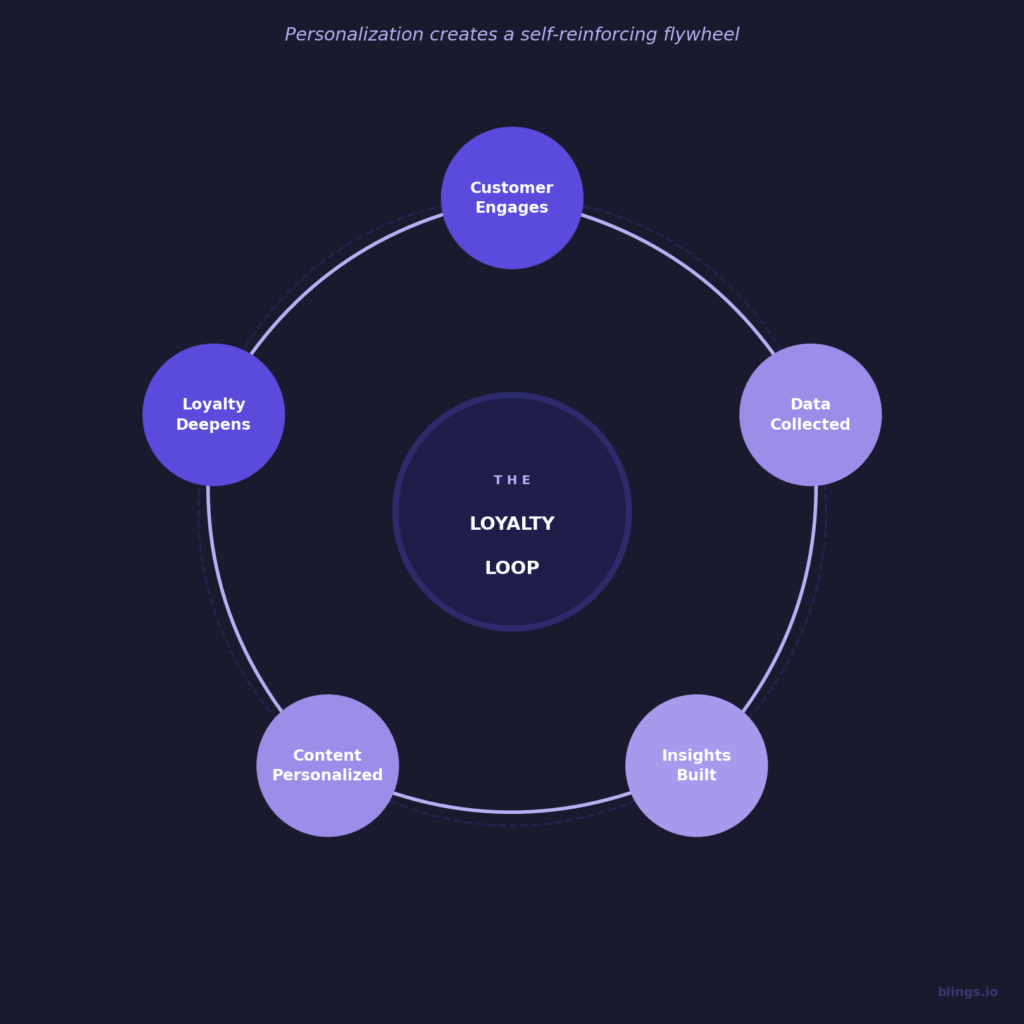
Personalization does not just improve individual campaigns. It constructs a self-reinforcing system. The more a customer engages, the more data you collect. The more data you collect, the better you can personalize. The better you personalize, the more they engage.

Every turn of the loop raises the floor for what customers expect from your brand—and raises the barrier for competitors trying to poach them. The brands that invest in this flywheel now will own disproportionate loyalty through the rest of the decade.

the loyalty loop

Practical steps to start your loop today:

  1. Audit your current data signals. Identify what behavioral, transactional, and declared preference data you already collect, and where the gaps are.
  2. Choose one channel to personalize first. Email and video are the highest-ROI starting points for most brands. Prove the model before scaling it.
  3. Establish your measurement baseline. Capture pre-personalization metrics now, so you can demonstrate lift with precision once the program launches.
  4. Build a zero-party data collection flow. Add preference centers, onboarding surveys, or interactive content that trades value for declared preferences.
  5. Integrate your tech stack. Personalization only scales when your CRM, content platform, and delivery layer speak to each other in real time.

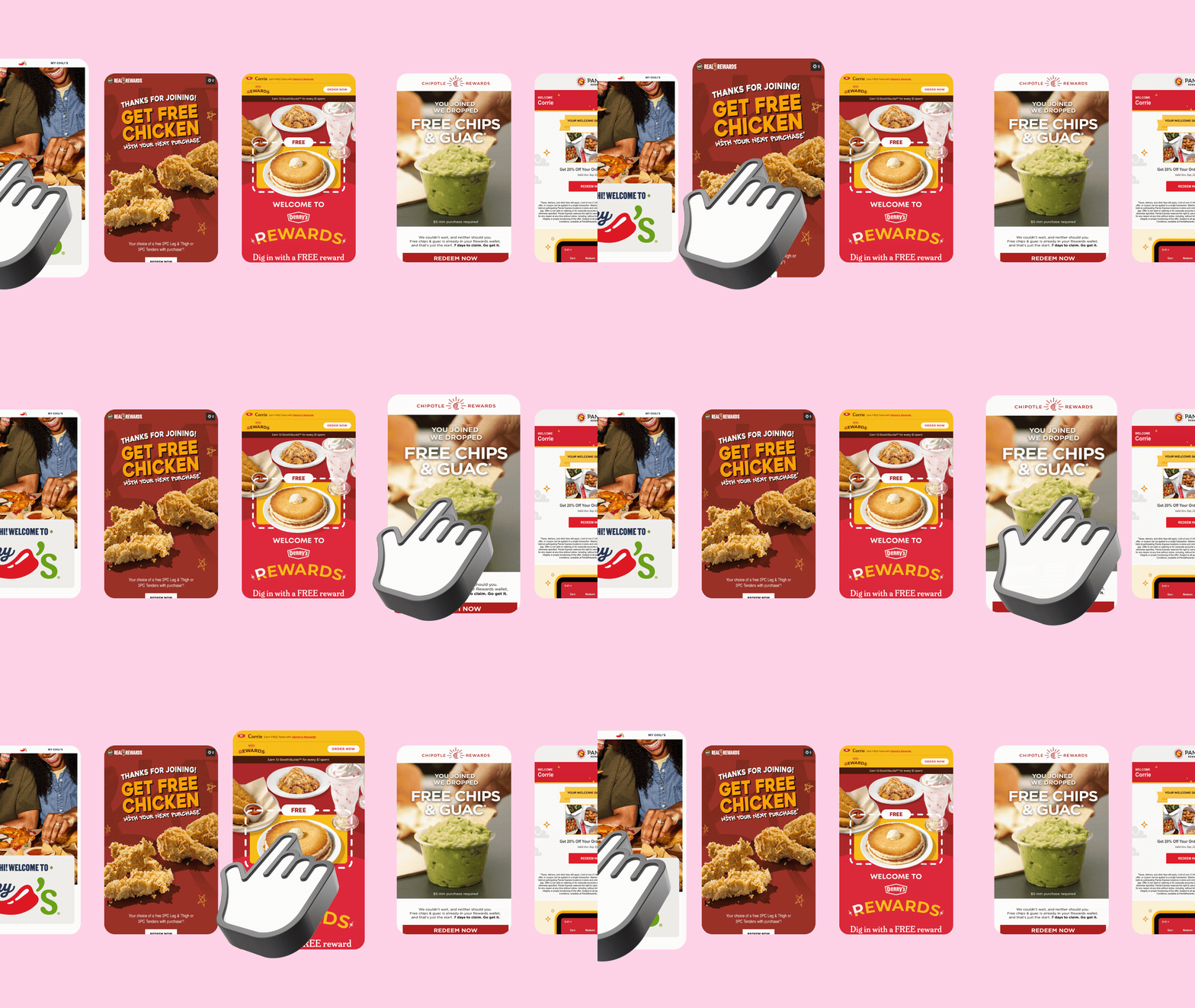
Ready to turn your static emails into dynamic, high-conversion journeys? See how Blings helps brands like McDonald’s  and Habit Burger turn personalization into a durable competitive advantage.

See Blings in Action, For Free!
Get Started for Free