Best Practices
News

Marketing Automation Trends to Watch in 2026: AI and Beyond

Yonatan Schreiber's avatar Yonatan Schreiber | Apr 28, 2026
untitled
Yonatan Schreiber's avatar Yonatan Schreiber | Apr 28, 2026

Introduction

Marketing automation in 2026 is shifting from scheduled workflows to AI systems that plan, personalize, and optimize campaigns in real time. The trends shaping the year share one trait: the data layer, the creative layer, and the delivery layer are collapsing into a single live system. This post covers the five trends that matter most, what they require from infrastructure, and how to tell whether your stack is ready.

What is AI-driven marketing automation in 2026?

AI-driven marketing automation in 2026 is the use of machine learning to orchestrate, personalize, and generate marketing content across channels without a human in the loop for each send. The shift is structural. Scheduled email flows, pre-rendered creative, and static segmentation are being replaced by systems that predict intent, select the right variant, and render content at the moment of open.

According to McKinsey’s research on personalization, 71 percent of consumers expect personalized interactions, and 76 percent feel frustrated when they do not get them. AI is how marketing teams deliver on that expectation at scale. Twilio Segment’s State of Personalization Report adds that 69 percent of businesses increased their personalization investment year-over-year, and that trend has only accelerated into 2026.

Trend 1: Autonomous campaign orchestration

Autonomous campaign orchestration is the first trend: AI systems that plan, execute, and adjust campaigns across channels in real time, without a marketer touching each send. The shift is from “build the workflow once” to “set the goal and let the system optimize.”

What this requires from infrastructure:

  • A unified customer data layer the AI can read and write to
  • Creative assets that can variate at runtime, not re-rendered assets
  • Event-level tracking that closes the loop between action and outcome

Teams that still rely on pay-per-render video pipelines or batch-generated assets cannot keep up. Autonomous orchestration assumes the creative is as dynamic as the data.

Trend 2: Hyper-personalization at the Moment of Open

The second trend is hyper-personalization at the Moment of Open. Generic “Hi, first name” is table stakes. Leading programs now tailor the offer, the creative, and the message to the viewer’s current context at the exact instant they engage.

The key insight: customer data changes constantly. A loyalty balance, an inventory level, a pending renewal can all shift between send time and open time. This is the Moment of Truth Gap, and it is where static campaigns lose accuracy.

Blings solves this structurally. MP5 technology generates the video on the recipient’s device at the Moment of Open, pulling live data from the CRM at the instant the asset is viewed. The result is Moments-of-Truth Accuracy at every touchpoint, not just at send.


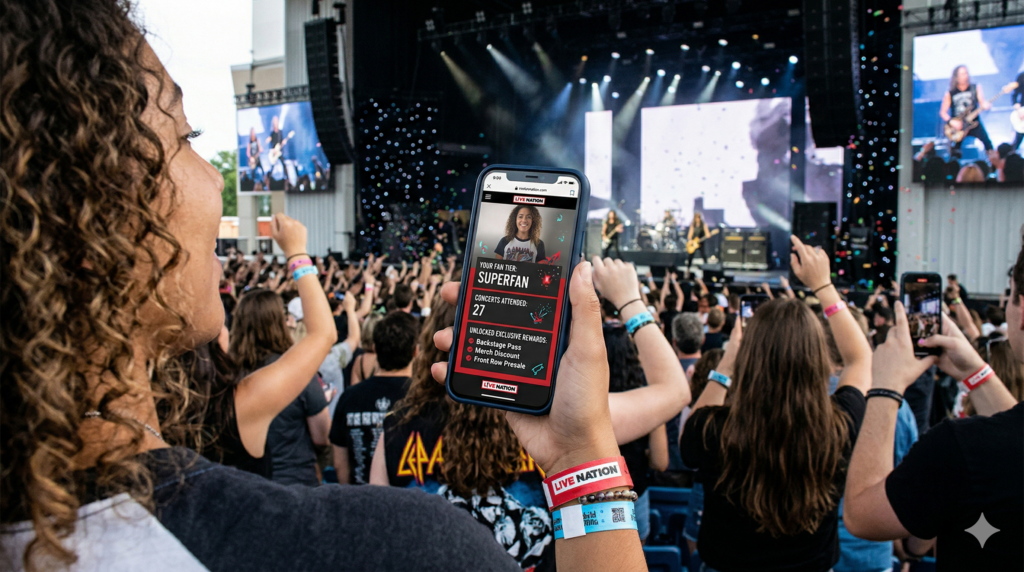
A concert fan holds up a smartphone displaying a personalized Live Nation loyalty profile at a live outdoor rock concert, showing her "Superfan" tier, 27 concerts attended, and unlocked rewards including a backstage pass, merch discount, and front row presale access.


Trend 3: Generative content, rendered live

The third trend is generative content that renders live rather than in a pre-production batch. Generative AI writes copy, produces images, and drafts variants. The question for marketing operations is how those variants reach the viewer.

Two patterns are emerging:

  1. Pre-render at scale. Use generative AI to produce thousands of variants, then pick one at send time. This pattern still suffers from data decay and still requires a rendering pipeline.
  2. Render at runtime. Use generative AI to populate a Dynamic Master Template with the right copy, image, or offer at the Moment of Open. No pre-rendering, no data decay, no storage bill.

The second pattern is where the architecture matters more than the algorithm. A deeper look at this is in the Blings piece on why architecture matters more than the algorithm.

Trend 4: Real-time CRM data activation

The fourth trend is real-time CRM data activation. Marketing automation has always leaned on CRM data, but the latency has been hours, not milliseconds. In 2026, leading programs read from the CRM at the exact moment of engagement.

This matters most for:

  • Loyalty programs. A customer’s point balance changes constantly; the communication has to reflect the current number, not yesterday’s.
  • Inventory and availability. A product shown as in stock at send time may be out by open time.
  • Next-best-offer. The best offer for a customer is a function of their most recent behavior, not a segmentation from last week.

Autonomous Personalization is the result: a video delivery system that automatically selects and renders the most relevant visual elements for a user at the Moment of Open. The creative becomes an output of the data layer, not a sibling to it.

Trend 5: Architecture that eliminates data decay

The fifth trend is architecture that eliminates Data Decay at the infrastructure level. Data Decay is the phenomenon where personalized content becomes inaccurate over time because it was baked with old data. In 2026, the teams that shipped the most campaigns without a production backlog were the ones whose architecture made Data Decay impossible in the first place.

Three architectural patterns are winning:

  • Client-Side Rendering. The video or creative is built on the recipient’s device at the moment of load, eliminating the cost and latency of server-side rendering.
  • Zero-Knowledge Architecture. The personalization platform never sees or stores PII, which removes the security review cycle that slows enterprise launches.
  • Template-based Infrastructure Pricing. Pricing scales with templates, not renders, so scaling campaigns does not scale costs linearly. This is the model Blings calls Infrastructure Pricing.

For more detail on the Blings approach, see the Blings platform overview.

What does this mean for marketing teams planning 2026?

Marketing teams planning 2026 should audit their stack against four questions:

  1. Does the creative layer read from live data, or does it ship frozen at send time?
  2. Does the delivery model support per-viewer variation without re-rendering?
  3. Does engagement data flow back into the CRM at event level, not aggregate level?
  4. Does pricing scale with templates and usage, or with every render?

If the answer to any of these is “no,” the gap is not a new AI tool. It is the infrastructure underneath. The companies that will ship the most in 2026 are the ones whose architecture makes the trends above automatic rather than aspirational.

Frequently asked questions

What is the biggest marketing automation trend for 2026?

Autonomous orchestration and hyper-personalization at the Moment of Open. Both require infrastructure that can render content live from CRM data, not pre-rendered assets.

Is AI replacing marketers in 2026?

No. AI is replacing manual steps in campaign production and optimization. Marketers move up the stack to strategy, creative direction, and measurement.

How does generative AI fit into marketing automation?

Generative AI is best used to populate Dynamic Master Templates at runtime, not to produce thousands of pre-rendered variants. The runtime pattern avoids data decay and storage costs.

What role does video play in AI marketing automation?

Video that renders from live CRM data at the Moment of Open is becoming the highest-performing format for loyalty, onboarding, referrals, and win-back. Blings’ MP5 technology is built for this pattern.

How do you avoid data decay in AI-driven campaigns?

Move to client-side rendering and live CRM reads at the moment of engagement. Pre-rendering locks in the data at send time, which is the source of decay.

See how Blings can work for you
Get Custom Demo