Eight brands never said hello: the QSR welcome email, measured
Yosef | Sep 8, 2026
Yosef | Sep 8, 2026
The welcome email is the cheapest, most obvious, most universally recommended message in lifecycle marketing. It has one job: acknowledge that a stranger just handed you her address.
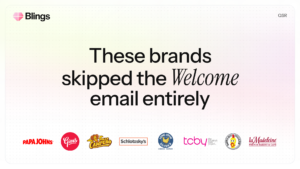
Eight brands out of 127 skipped it entirely. They dropped a new subscriber straight into the promotional stream and started selling.
About this study. The QSR email index enrolled in the email, loyalty, and lifecycle programs of 127 quick service and fast casual restaurant brands beginning August 2026, using one identity and one inbox. Every message is captured, labeled, and timestamped. No claim about a named brand appears here without a verbatim quote, a timestamp, or a directly observed screen.
The eight brands with no welcome
Gino’s, Schlotzsky’s, Long John Silver’s, Papa Johns, Dave’s Hot Chicken, TCBY, Pollo Campero, and la Madeleine each sent promotional email to a brand-new subscriber without ever acknowledging the signup.
A second-order pattern settles the obvious objection. A missing welcome could be a delayed trigger. It is not. Several of these brands have gone on to send more promotions rather than a belated hello. They do not have a welcome program at all.
The cost is not sentimental. A welcome is the only message a brand sends while the subscriber is still paying attention for reasons other than a discount, and it is the only moment when explaining who you are does not feel like an interruption.
TCBY proves the welcome is not a coupon delivery vehicle
TCBY is the cleanest test case in the study, because its first-ever email is genuinely good:
Running errands takes energy. Rewarding yourself takes 0 effort. Next time you finish grocery shopping, gym duty, or running around town, swing by for a quick cup.
No discount. No code. No urgency. It sells an occasion rather than a price, which is considerably harder to write than a coupon and which almost nobody in this study attempts.
Here is the problem. That is not a welcome. It is a promotion that happens to be well written, sent to somebody the brand has never greeted.
If a welcome mattered only as a mechanism for delivering a coupon, TCBY would lose nothing by skipping it. What it actually loses is the chance to establish who is talking before it starts making assumptions about her afternoon. The copy assumes a relationship the brand never opened.
Long John Silver’s is the strangest send in the study for the same reason. A fast food chain emailed a new subscriber its own company history, opening “Ahoy Matey!”, with no offer, no code, and no product. That is a deliberate editorial decision rather than a template default, and in a welcome slot it would have been interesting. It arrived second. Its first email was a straight “Argh, grab a FREE Basket today Matey” coupon. Offer first, origin story second, no hello in between.
Speed predicts nothing
The industry treats time-to-welcome as a proxy for sophistication. This study does not support that.
Our speed rubric, revised on August 24 to reward genuine immediacy:
Score
Time from signup to first email
5
Within 5 minutes
4
5 minutes to 1 hour
3
1 to 24 hours
2
24 to 72 hours
1
3 to 7 days
0
Nothing after 7 days
Both ends of that axis produced close to worthless email.
Steak ‘n Shake sent the fastest welcome in the set, in under one minute. Its body contains the literal words “Welcome Email.” A placeholder from the build, shipped to a live subscriber, at the speed of a well-configured trigger.
Dunkin’ sent the slowest, eight days after signup. The email is entirely images: the only live text is three navigation labels and a legal footer. With images blocked, a subscriber receives nothing at all.
Dunkin’ matters more than a single slow send, because it was enrolled specifically to test whether the silence we were seeing from smaller coffee chains reflected a capability problem. It does not. Starbucks mailed inside the hour. Peet’s ran a complete three-stage offer lifecycle. Blue Bottle sent within minutes. The largest coffee-led chain in the United States took eight days to say hello and then said nothing. That is a priority gap, not a capability gap.
Two brands show what the top of the scale looks like when somebody is paying attention. Waffle House delivered a welcome with a coupon inside five minutes, behind a plain email club with no app and no password.
Texas Roadhouse took the better part of a day, was the only brand in the study to state a service level (“within 48 hours”), met it, and produced one of the two most personalized emails we captured.
Stating an SLA and then meeting it is a small thing. Exactly one brand out of 127 did it.
The zero balance: five brands led with the least motivating number available
Five brands opened a welcome email with a zero point balance.
Brand
What rendered
Schlotzsky’s
“0 REWARD POINTS”
Wendy’s
“Rewards Points: 0”
Pizza Hut
“0 points”
KFC
“0 PTS”
Torchy’s Tacos
“0 points”
Long John Silver’s found a sixth and worse variety. Its email renders “COINS BALANCE: Join Today”: the field label prints, and a call to action sits where the number belongs. That is arguably worse than a zero, because at least a zero is true. This one advertises that a personalization slot exists and then fails to fill it.
Torchy’s is the strangest case, because it renders that zero directly alongside a genuine free queso and chips reward. It has something real to give her, and it still put a zero next to it.
To be clear about what is and is not being criticized. We are not analyzing loyalty programs. Every new member starts at zero. The finding is that these brands chose to make a zero the first thing in the email.
Two of the five proved they had better content all along
This is the part that turns an aesthetic complaint into a measurable defect.
Wendy’s led with “Rewards Points: 0” on August 24. On August 26 it explained the earn rate: “Every $1 spent earns 10 points towards FREE Wendy’s.” On August 28 it sent “These FREE Nuggs are all yours,” leading with the offer it had buried on day one.
Pizza Hut did the identical thing: a “0 points” welcome, then a points-conversion email four days later.
Both brands knew how to make points sound worth having. Both had the material available on day one. Both put the number before the reason, then sent a second email to explain what the number was for. Had either welcome led with the earn rate and the free food it buried, the follow-up would have been redundant.
The zero balance is not a data limitation. It is an ordering decision, and the follow-up email is the proof.
Yogurtland shows the alternative, and it is deliberate
Yogurtland’s welcome reads: “You’re halfway to your $5 Reward,” having seeded 50 points just for registering.
Two separate decisions there, not one. It seeded the balance so it is never zero, and it framed the number as progress toward something rather than a quantity possessed. “Halfway there” and “zero points” can be the identical database state, and they read as opposites.
On August 27 it built a second email around the same frame, which makes it a deliberate position rather than a lucky template default. That email also carries the most detailed program disclosure in the study: three tiers, the point threshold for each, a $5 reward per 100 points, birthday rewards rising from $5 to $7, half-birthday rewards, quarterly bonus points, and double points on the second of the month. Whatever else is imperfect about Yogurtland’s hygiene, a subscriber can work out precisely what she gets.
The best front door in the study has the emptiest welcome behind it
Pizza Hut leads the consent axis. It verified the address with an emailed code before sending anything, which is stronger than a checkbox double opt-in because a code proves mailbox control, and it allowed the phone number to be declined. That combination is the best consent handling we have recorded.
Its welcome then says “0 points” and offers nothing.
Firehouse Subs shows the mirror image. It also emails a verification code before it will mail you anything, which is genuinely rigorous. It then required a phone number for an email program and greeted a named subscriber “Dear Loyalty Member.”
This is the study’s recurring structural observation, and the welcome email is where it is most visible. Consent, speed, personalization, offer design, and send timing appear to be owned by different people inside these companies who never compare notes. A brand can be best in class on one axis and bottom of the table on the next, in the same message.
What a good welcome actually does
Across 127 brands, the welcomes that scored well share nothing in terms of budget, platform, or brand size. They share a sequence of decisions.
Acknowledge the signup. Say that something happened. Eight brands did not.
Say who is talking before making an offer. Jeni’s opened with “Ice cream with everything it needs and nothing it doesn’t. No shortcuts. No fake stuff. No gimmicks,” and put the discount second.
Lead with the reason, not the counter. Explain what points are for before showing how many she has.
Use one thing you already know. A&W put the subscriber’s chosen restaurant in the first line, above the hero image.
Proofread the rendered output, not the template. “Welcome Email” made it into a live send from a national chain.
None of these require a platform migration. Four of the five require nobody to write any new code at all.
Frequently asked questions
How many QSR brands send no welcome email?
Eight out of 127 in this study sent promotional email to a new subscriber with no welcome at any point: Gino’s, Schlotzsky’s, Long John Silver’s, Dave’s Hot Chicken, TCBY, Papa Johns, Pollo Campero, and la Madeleine.
Does a faster welcome email mean a better welcome email?
No. The fastest welcome in this study arrived in under one minute and contained the placeholder text “Welcome Email.” The slowest arrived after eight days and contained no live copy at all.
What is a good time-to-welcome benchmark?
Within five minutes is achievable and several brands hit it, including one with no app, no account, and no password. Anything past 24 hours is a configuration choice rather than a technical constraint.
Why is showing a new member zero points a problem?
Every new member starts at zero, so the number is accurate. The problem is choosing it as the first thing the subscriber reads. Two brands in this study later sent the earn rate and the reward they had buried, which proves the better content existed on day one.
What did the best-scoring welcome emails have in common?
They acknowledged the signup, established the brand’s voice before the offer, used at least one field the brand had already collected, and led with the reason to participate rather than the current balance.
This is post two in the QSR email index series. Post three covers what happens after the welcome, and why 123 brands issue an offer they never mention again.