Video Marketing

Using video to keep customers engaged post-purchase

Yosef's avatar Yosef | Jun 3, 2026
Two smiling young people looking at their phones against a blue sky, with the title "Using Video to Keep Customers Engaged Post-Purchase"
Yosef's avatar Yosef | Jun 3, 2026

Most marketing budgets are organized around the moment before a purchase. The acquisition push, the consideration nurture, the closing offer. The moment after the purchase usually gets a single transactional email and silence. This is a costly habit. Customers who recently completed a purchase are in the highest-attention window the brand will ever have with them. The decision to buy was active. The product is on the way. The relationship is fresh. Communications that arrive in this window get opened, watched, and acted on at rates several multiples above what later messages will produce. Most brands waste the window.

This piece walks through how to use video to keep customers engaged in the days and weeks following a purchase, what brands like Habit Burger Grill, Wyndham, Live Nation VIP, and Macy’s have built in this window, and the architectural choices that make ongoing post-purchase engagement sustainable.
Why is the post-purchase window so valuable?

The post-purchase window is valuable because the customer’s relationship with the brand is at peak attention. They just acted on the brand. They are anticipating the product or service. They are in a positive cognitive frame that is rare to recreate later. Communications during this window land in a context the customer is already paying attention to, which produces engagement metrics that the rest of the year cannot reach.

The post-purchase window also shapes the customer’s expectations for the rest of the relationship. A brand that communicates well in this window builds a baseline of attentiveness that the customer will measure future interactions against. A brand that goes silent or sends generic outreach trains the customer to expect generic outreach later.

According to Bain and Company research on the economics of loyalty, customers who receive personalized post-purchase communications show 23% higher repeat purchase rates and 18% higher LTV compared to customers who receive only standard transactional emails. The difference compounds over the customer’s lifecycle.

What does effective post-purchase video look like?

Effective post-purchase video has four properties. It acknowledges the purchase specifically, not generically. It surfaces information the customer needs (delivery, setup, onboarding, usage). It introduces relationships the customer cares about (loyalty status, community, related products). It sets up the next moment in the relationship without pitching.

The acknowledgment is the easiest part to get wrong. A transactional confirmation that lists the item and a tracking number is information. A personalized video that names the customer, shows the product, references the customer’s history with the brand, and previews what is coming next is acknowledgment. The first produces a 30-second utility moment. The second produces a multi-minute experience that shapes the customer’s expectations for the rest of the relationship.

What kinds of post-purchase video produce the most lift?

Three formats consistently produce strong results. Each addresses a different part of the post-purchase window.

The personalized confirmation. Sent immediately after purchase. Names the customer, shows the product or service, sets expectations for what is coming next. The format combines transactional utility with brand recognition.

The setup or onboarding sequence. Sent in the first week. Walks the customer through using the product, redeeming the benefits, or accessing the community. The format is short, instructive, and personalized to the customer’s specific configuration.

The post-experience recap. Sent after the customer has used the product, attended the event, or completed the service. Reflects what happened, summarizes the value, and previews the next moment. Live Nation VIP used this format for the Trilogy Tour, producing 82 seconds of average watch time on a 40-second video and a 16.6% share rate. See the Live Nation VIP case study.

How does post-purchase video integrate with loyalty programs?

Loyalty programs and post-purchase communications belong in the same conversation. A purchase is the moment the customer earns points, advances toward a tier, or unlocks a benefit. A post-purchase video that ignores the loyalty dimension is leaving the most engaging hook on the table. A post-purchase video that surfaces the customer’s new loyalty status, tier proximity, or unlocked benefits turns a transactional confirmation into a relationship moment.

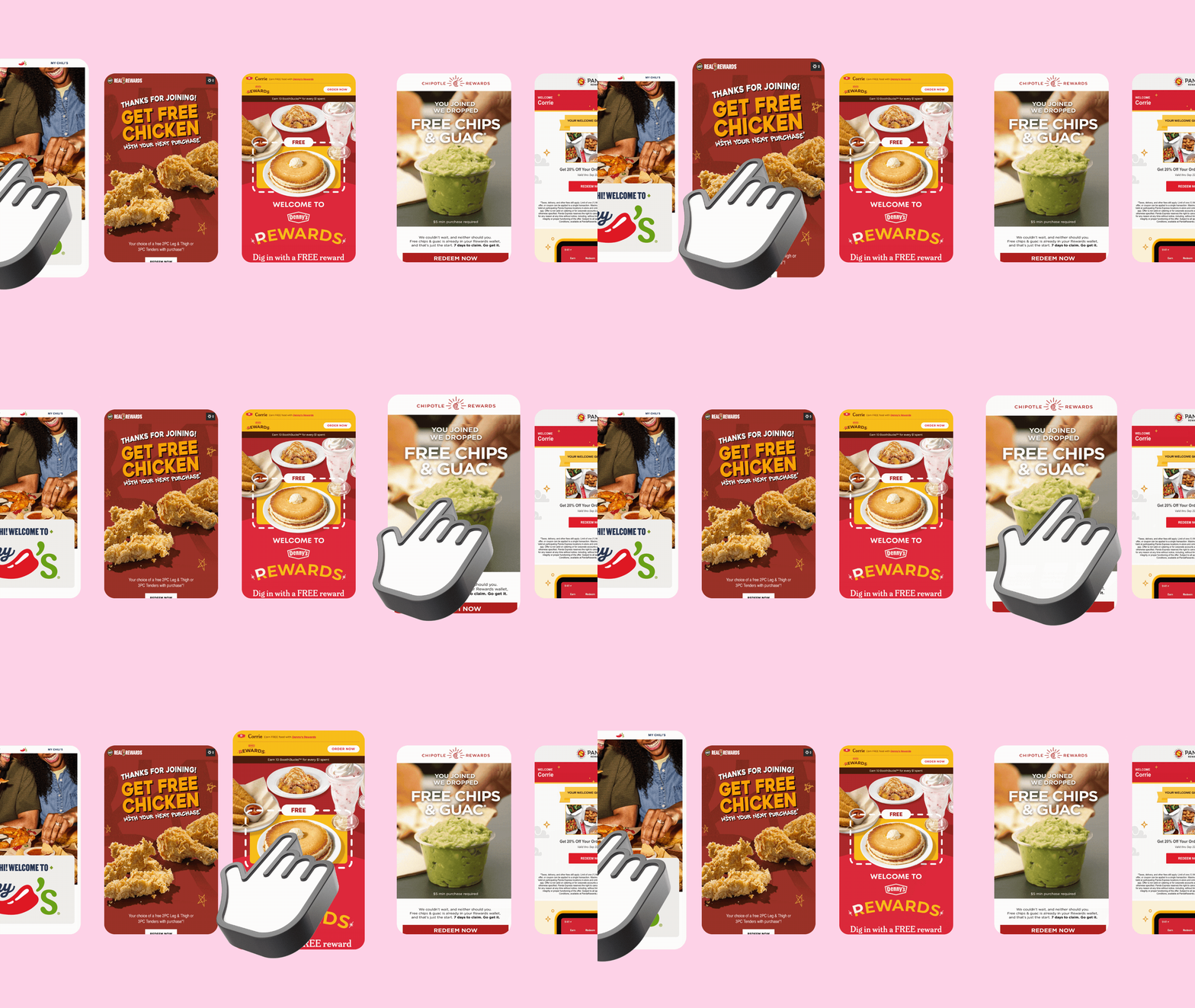
Habit Burger Grill built this connection explicitly. Each customer received personalized communications that recognized their order history, location, and tier progress. The campaign lifted loyalty membership signups by 47%, in part because the post-purchase moment surfaced the value of joining the loyalty program in a way that generic enrollment prompts could not. See the Habit Burger Grill case study.

Wyndham built its loyalty engagement around the personalized annual recap, which reflects every stay and every point earned across the year. The recap is technically a post-purchase asset in aggregate: it acknowledges the customer’s behavior over twelve months. The campaign produced a 75% lift in email CTR. See the Wyndham year-end recap case study.

The pattern across these brands is consistent. Post-purchase video and loyalty programs reinforce each other when they share the same data spine and the same rendering layer.

What architecture supports continuous post-purchase engagement?

Continuous post-purchase engagement is operationally heavy under the traditional video personalization model. Every purchase event would have to trigger a per-customer render, which inflates production cost linearly with order volume. The architectural alternative is on-demand rendering. The same Dynamic Master Template can serve every post-purchase moment, with the customer’s specific data resolving on their device at the moment of open through MP5 technology.

The integration matters as much as the rendering. The post-purchase video has to fire on the actual purchase event, which means the trigger has to live in the e-commerce platform, the loyalty system, or the CRM. Blings integrates natively with Salesforce, HubSpot, Braze, Iterable, and Klaviyo, which means the trigger and the personalization can share the same event stream.

For a deeper architectural treatment, see the MP4 is dead.

What does the post-purchase journey look like across the customer lifecycle?

The journey is not a single moment. It is a sequence that maps roughly to the days following the purchase. The exact timing depends on the category, but the structure is consistent.

  • Hour 0 to hour 1: personalized confirmation video, replacing the standard transactional email
  • Day 1 to day 3: setup or onboarding video, calibrated to the specific product or service
  • Day 7 to day 14: usage check-in, surfacing features the customer has not yet engaged with
  • Day 30: milestone moment, reflecting on the first month of the relationship and previewing what is next
  • Day 60 to day 90: tier or status recognition, if applicable, anchoring the customer in the loyalty program
  • Ongoing: monthly or quarterly recap, depending on category cadence

Each touchpoint is a personalized video, anchored on the customer’s data, rendered on demand. The Dynamic Master Template is built once. The sequence runs continuously. The customer experiences a deliberate, consistent post-purchase relationship instead of the silence most brands deliver.

How do you measure post-purchase video performance?

The measurement framework looks slightly different from acquisition campaigns because the success signals are retention-driven. The metrics that hold up over time include open rate (which should be unusually high in this window), watch completion (which signals attention quality), repeat purchase rate (the downstream conversion that matters), and time-to-second-purchase (which signals how well the post-purchase sequence accelerated the next engagement).

The fourth metric is the one that matters most. A post-purchase sequence that produces strong opens but a flat time-to-second-purchase has produced motion without progress. The fix is usually in the bridge from the post-purchase moment to the next product or experience the customer should engage with.

What are the common mistakes in post-purchase video?

The mistakes are predictable. Treating the confirmation as utility only: the transactional email replaces the opportunity for relationship. Skipping the onboarding window: the brand assumes the customer will figure out usage on their own, and most do not. Pitching too early: the post-purchase window is for recognition, not for upsell. The upsell can come in the day-30 or day-60 moment. Reusing acquisition creative: the customer just acted. Showing them the acquisition messaging again signals the brand does not know who they are. Treating each touchpoint as a one-off campaign: the post-purchase sequence is a system, not a series of campaigns.

FAQ

Should the post-purchase confirmation replace the standard transactional email? Yes for high-emotion or high-value purchases. The transactional content can be carried inside the personalized video. For lower-value purchases, the personalized video can supplement the transactional message rather than replace it.

How long should a post-purchase video be? Most teams aim for 30 to 60 seconds. Onboarding sequences can run longer. The watch completion data tells you whether the length is right for the audience.

Does post-purchase video work for digital products? Yes. Subscription services, software products, and digital downloads all benefit from the same post-purchase pattern, with the data spine shifting toward usage and feature adoption rather than physical shipment.

How does Blings handle the trigger from the purchase event? The purchase event in the CRM or e-commerce platform fires the campaign in the connected marketing automation tool. Blings consumes the personalization variables and renders the video on demand at the moment of customer open.

What is the typical lift from personalized post-purchase video over transactional email? Production data shows open rates 1.5x to 2x higher, watch completion rates 60% to 90% versus single-digit engagement on standard transactional content, and repeat purchase lift in the 15% to 30% range.

The takeaway

The post-purchase window is the most under-leveraged moment in most brands’ customer relationships. The customer is paying attention, the brand has fresh data to personalize on, and the engagement metrics are higher than they will be at any other point in the year. The brands taking this seriously have moved beyond transactional emails into a personalized post-purchase sequence anchored on real customer data, delivered through on-demand rendering. Habit Burger Grill, Wyndham, and Live Nation VIP show what the sequence can produce when the architecture supports it.

The cost of a strong post-purchase program is small compared to acquisition spend. The compounding effect on LTV, retention, and repeat purchase is the largest hidden lever in most marketing stacks. The brands that move first will set the engagement baseline the rest of their categories eventually have to chase.

Talk with a video expert now to see what you can accomplish.
Schedule Call