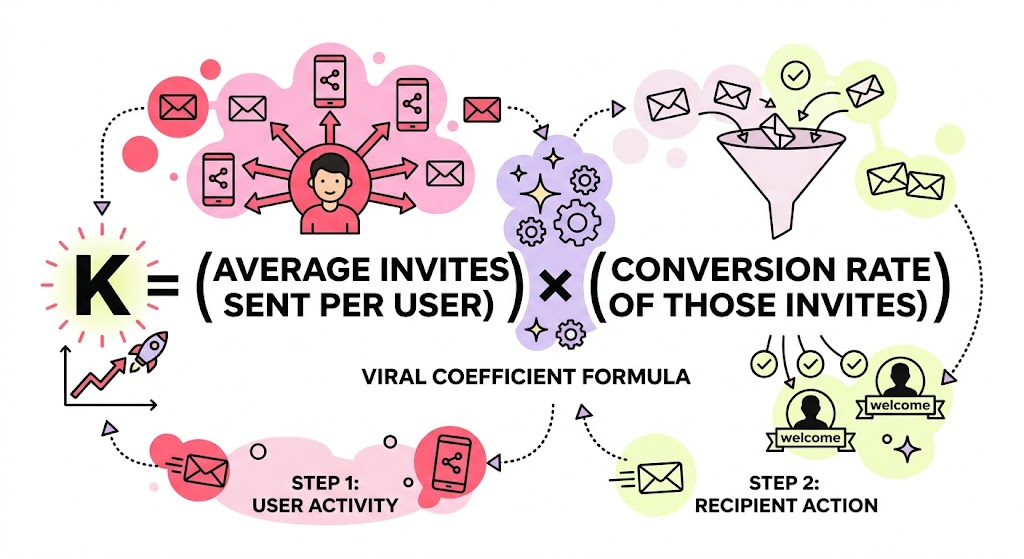
8. The measurement gap that most teams leave open
Even teams that adopt K-factor as a metric often measure it against click data alone. They know how many people clicked the referral link. They do not know whether the referral message itself drove the click or whether the recipient would have converted through another channel anyway.
This is an attribution problem, and it is persistent. The cleanest solution is controlled experimentation: run a referral cohort alongside a matched control group that receives no referral prompt, and measure the incremental conversion delta. That delta is your true K-factor signal, stripped of organic noise.
The secondary measurement gap is creative performance. Two referral campaigns can have identical incentive structures and produce dramatically different K-factors because one uses a static, generic asset and the other uses a dynamic, personalized one. Without isolating creative performance as a variable, you cannot confidently attribute K-factor changes to the right cause.
Measuring referral growth with precision requires the right metric, the right attribution methodology, and the right asset infrastructure. That is where Blings fits into the stack. Its client-side architecture supports on-demand generation of personalized Dynamic Videos at scale, meaning every referral asset can carry the recipient’s name, context, and a relevant visual experience without requiring a separate render for each user. The Live URL model ensures that the video is always current, always personalized, and always measurable, without creating the creative bottleneck that typically limits referral program experimentation. For teams serious about moving their K-factor, the content layer is not a soft variable. It is a hard lever.