Personalization
Video Marketing

Personalized video for telecom: reducing churn, improving onboarding, and winning back lost customers

yonatan's avatar yonatan | Apr 15, 2026
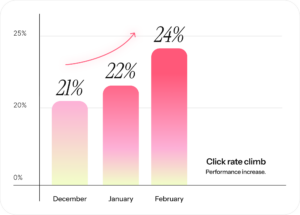
click rate climb
yonatan's avatar yonatan | Apr 15, 2026

Introduction

Telecom is one of the highest-churn industries in enterprise marketing. Customers switch providers for pricing, for coverage, for promotional offers from competitors, and, most commonly, because their current provider made them feel like a number in a database rather than a customer worth keeping.

Personalization at scale is the structural answer to this problem. When a telecom company can communicate with every subscriber as an individual, referencing their specific plan, their actual usage, their available upgrades, and the history of their relationship with the brand, the probability of that customer staying increases. Personalized video is the most effective format for delivering this kind of communication at the volume and frequency that telecom requires.

This post covers the primary use cases, the operational challenges personalized video solves, and the metrics that matter most when evaluating a deployment.

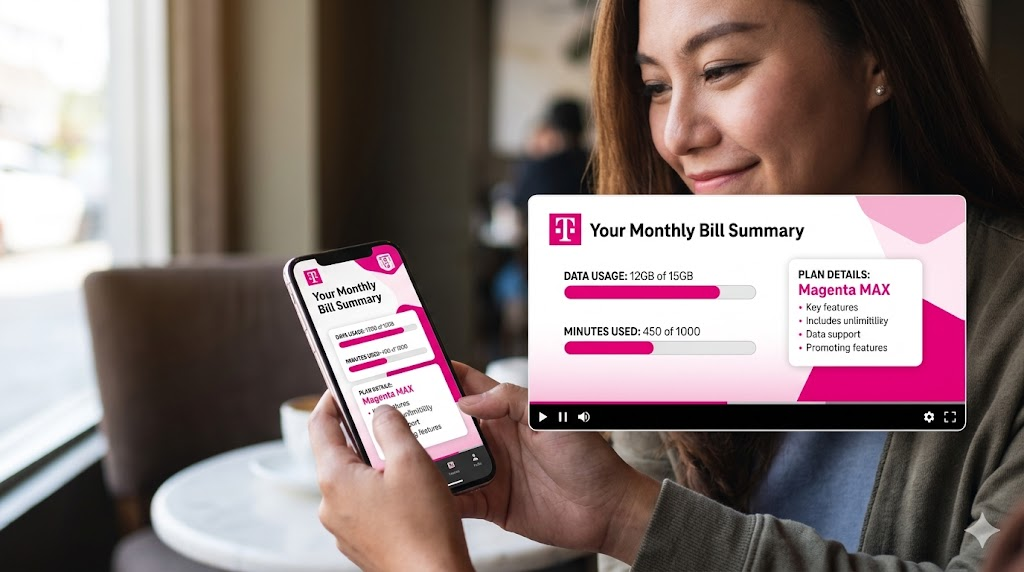
A woman smiling while viewing a personalized monthly bill summary video on her phone, showing her data usage, minutes used, and Magenta MAX plan details.

Why churn is a personalization problem

Telecom churn rates typically range from 15% to 30% annually, depending on market segment and competitive pressure. Even a 2% reduction in annual churn represents significant retained revenue for a provider with millions of subscribers.

The research is consistent on the primary driver: customers who feel understood by their provider churn at lower rates than customers who feel like they receive the same communication as everyone else. This is not a sentiment observation. It is a behavioral one. Customers who receive generic renewal reminders, generic promotional offers that may not apply to their current plan, and generic billing statements that do not explain their specific charges are making a rational calculation: if this provider does not know me, a competitor that offers me a targeted deal is worth exploring.

Personalized video changes this calculation by making every communication specific to the subscriber. Their name, their plan, their usage, their available upgrade, their loyalty status, their renewal date: all of it rendered at the Moment of Open, accurate to the live data in the CRM, delivered in a format that takes less than two minutes to consume.

Key use cases

Personalized bill summaries

The monthly bill is the highest-frequency touchpoint in the telecom customer relationship. It is also one of the most anxiety-producing. “Bill shock,” the experience of receiving a bill higher than expected, is among the top reasons customers contact support and, when unresolved, a leading cause of churn.

A personalized video bill summary that walks the customer through their charges in plain language, explains any unusual items, and shows them their data usage relative to their plan allowance reduces bill shock calls and increases the probability that the customer understands and accepts their statement without escalating.

The operational savings from call deflection are direct. For large telecom providers, a 10% reduction in billing-related inbound calls represents millions of dollars in operational cost savings annually.

Onboarding and activation sequences

A new subscriber in their first 30 days is making a decision about whether the provider they chose was the right one. The onboarding experience has an outsized influence on long-term retention: customers who complete key activation steps (setting up a personal account, activating international roaming, exploring app features) in the first two weeks have measurably lower churn rates in the first year.

A personalized onboarding video sequence that acknowledges the customer’s specific plan, highlights the features most relevant to their usage profile, and guides them through the activation steps in order increases completion rates. The video format reduces the cognitive effort required to understand what to do next: the customer watches and follows rather than reading and interpreting.

Plan upgrade and upsell communications

The moment when a subscriber’s data usage approaches their plan limit is a high-intent opportunity. A personalized video triggered by this behavioral signal, showing the customer their current usage, their remaining allowance, the cost of overages versus a plan upgrade, and a clear CTA to upgrade, captures the opportunity at the exact moment the customer is experiencing the relevant problem.

This type of trigger-based communication requires On-Demand Generation: the video must be generated at the moment the trigger fires, with data accurate to that instant. A server-side platform that renders a video in advance and stores it for later delivery will show the customer their usage from hours or days ago. Blings’ Moment of Open technology ensures the data is current at the second the customer engages.

Win-back campaigns for lapsed subscribers

Customers who have cancelled or gone dormant are not necessarily lost permanently. But the content of a win-back communication must demonstrate that the provider knows something specific about that customer’s history, not just that they left.

A personalized video win-back that references the customer’s previous plan, the time they were a subscriber, what has improved since they left, and a specific re-engagement offer tailored to their profile creates a more compelling case for return than any generic promotional email. The specificity signals effort and signals relevance.

Loyalty and anniversary communications

Subscribers who reach tenure milestones (one year, two years, five years) are among the most valuable customers in any portfolio. Communicating specifically to this milestone, with a personalized video that acknowledges the customer’s loyalty duration, their usage history, and an exclusive reward or offer, reinforces the relationship at a moment that might otherwise pass unnoticed.

Telecom loyalty programs that deploy personalized video at anniversary moments consistently see higher reward redemption rates and lower churn in the months following the communication compared to programs that send standard anniversary emails.

Network maintenance and service disruption notices

When network maintenance or a service disruption affects a specific geographic area or account type, a personalized video notification that acknowledges the customer’s specific service, explains the impact in plain terms, and sets an accurate expectation for resolution reduces the volume and intensity of service center contacts. Customers who feel informed during a disruption are significantly less likely to churn in the aftermath than customers who felt left in the dark.

The architecture requirement for telecom scale

Telecom personalized video programs operate at a scale that makes the choice of platform architecture a business decision, not a technical one.

A provider with 10 million subscribers, running monthly bill summaries plus quarterly usage reviews plus triggered upgrade communications, is generating hundreds of millions of personalized video views annually. At this volume, per-render pricing (a model where each video generation incurs a cost) creates an economics problem. The cost of the program grows proportionally with the subscriber base and the communication frequency, which is the opposite of what a scalable infrastructure should look like.

Blings’ Infrastructure Pricing, built around the Dynamic Master Template model, solves this. One template generates any volume of unique personalized versions without per-render fees. The cost structure is flat relative to volume: the 100 millionth personalized video costs the same to generate as the first.

For telecom at scale, this is the difference between a personalized video program that is financially viable as an always-on lifecycle infrastructure and one that must be rationed to specific campaigns because the per-render cost makes broad deployment prohibitive.

The compliance picture for telecom is also relevant. Subscriber billing data, usage records, and account details constitute PII under GDPR, CCPA, and comparable regulations in most markets. Blings’ Zero-Knowledge Architecture means subscriber data is never transmitted to or processed by the Blings platform. The video renders on the subscriber’s device using a live connection to the operator’s own billing systems and CRM. This satisfies the data residency and processing requirements that most telecom compliance teams impose on third-party vendors.

For more on how the architectural choice affects compliance outcomes, see Blings vs Idomoo: which personalized video platform is right for your enterprise?.

Metrics that matter

Monthly bill call deflection rate: The reduction in billing-related inbound service contacts following deployment of personalized bill summary videos.

Onboarding activation rate: The percentage of new subscribers who complete key activation steps within the first 30 days, compared to the baseline before personalized video.

Upgrade conversion rate: For trigger-based upgrade communications, the percentage of recipients who complete the upgrade action, compared to standard promotional email.

Churn rate delta: The change in voluntary churn rate for subscribers enrolled in personalized video lifecycle communication compared to a control group receiving standard communication.

Win-back conversion rate: The percentage of lapsed subscribers who reactivate following a personalized video win-back campaign.

Net Promoter Score: Subscribers who receive accurate, relevant, personalized communication consistently score higher on NPS surveys. In competitive markets where NPS is used to predict competitive vulnerability, this is a leading indicator of retention.

Integration with telecom infrastructure

Blings integrates with the CRM and CDP systems telecom operators use most commonly, including Braze, Salesforce, and Adobe Experience Cloud. The integration connects the Dynamic Master Template to the subscriber data source; from there, personalized video generation is automated and triggered by the events and schedules defined in the CRM workflow.

The Zero Tech Debt model means that when billing data formats change, when plan structures update, or when new fields need to be incorporated, the template is updated once and the change propagates immediately to every future personalized video generated from it. There is no re-rendering cycle, no campaign manager manually updating files, and no outdated content sitting in a queue waiting to be corrected.

According to Salesforce’s State of the Connected Customer, 84% of customers say the experience a company provides is as important as its product or service. In telecom, where the product (connectivity) is largely commoditized, the experience is frequently the only sustainable differentiator. Personalized video is the most effective tool available for delivering that differentiation at scale.

See how Blings can work for you
Get Custom Demo