
Personalization
Email

What is data decay, and why is it killing your campaign performance?

Yonatan Schreiber's avatar Yonatan Schreiber | Sep 15, 2026
Stacked paper sheets printed with rows of binary ones and zeros, shot at an angle.
Yonatan Schreiber's avatar Yonatan Schreiber | Sep 15, 2026

Every marketing campaign is built on customer data, and that data starts going stale the instant it is captured. A points balance changes, a favorite product goes out of stock, an address updates, a preference shifts. By the time a campaign is designed, built, and sent, the data it was built on is already out of date, and the gap between what the campaign says and what is currently true is silently degrading its performance. This is data decay, and it is one of the most underdiagnosed causes of campaign underperformance.

This piece defines data decay, explains why it kills campaign performance, and shows how generating content at the moment of open closes the gap. It draws on production data from Wyndham, Live Nation VIP, and Macy’s.
What is data decay?

Data decay is the gradual loss of accuracy in customer data over time as the real-world facts it describes change, so information that was correct when captured becomes wrong as points balances, inventory, preferences, and contact details shift. Every dataset decays; the only question is how fast and how much it costs.

The decay is continuous and invisible. A customer’s data does not announce when it becomes stale; it simply drifts out of alignment with reality. A loyalty balance captured on Monday is wrong by Friday if the customer earned points. A “recommended for you” product captured last week is wrong if it sold out. The campaign built on that data ships the stale version, confidently telling the customer something that is no longer true.

Why does data decay kill campaign performance?

Data decay kills performance because personalization built on stale data is worse than no personalization at all. A generic message that makes no claims cannot be wrong. A personalized message that confidently shows the customer an out-of-date balance, an out-of-stock product, or a superseded preference is actively wrong, and the customer notices.

The damage compounds. A customer who receives a personalized message with wrong data learns that the brand’s personalization cannot be trusted, which discounts every future personalized message. The very personalization meant to build recognition instead erodes it. The campaign underperforms not despite the personalization but because of the stale data underneath it.

The traditional production model makes this unavoidable. When a campaign is designed, the data is snapshotted. The video or email is built on that snapshot. Days or weeks pass before the customer opens it, and the snapshot has decayed the whole time. The longer the gap between capture and open, the more the data has drifted.

How does generating content at the moment of open fix data decay?

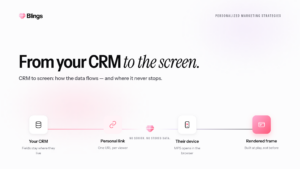
The fix is to stop snapshotting the data and instead pull it fresh when the customer opens the message. Generation at the moment of open means the content is assembled at the instant the customer opens it, pulling the current data rather than a snapshot captured when the campaign was built, so the message always reflects what is true right now. The decay gap collapses to zero because there is no gap between capture and delivery.

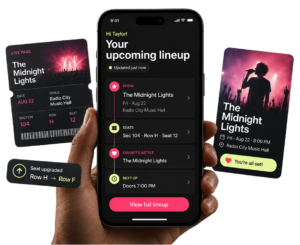
This is the core of the Smart Video approach. Instead of building a video on a data snapshot and hoping it is still accurate when the customer opens it days later, the video assembles at the moment of open with the current data. The points balance is current. The recommended product is in stock. The preference is the latest one. The personalization is finally trustworthy because it is never stale. For the architecture, see AI video personalization in 2026: why architecture matters more than the algorithm and the MP4 is dead.

What does closing the data-decay gap produce?

Closing the gap produces the personalization lift the data promised. Wyndham ran personalized recaps rendered at the moment of open and produced a 75% email CTR lift and a 66.7% survey completion rate, because the recap reflected each member’s current, accurate data. See the Wyndham case study. Live Nation VIP produced a 17.55% open lift and 16.6% share rate on personalized fan video built from current data. See the Live Nation VIP case study. Macy’s produced a 47% conversion lift on recaps reflecting each member’s accurate activity. See the Macy’s case study.

FAQ

What is data decay?

Data decay is the gradual loss of accuracy in customer data over time as the real-world facts it describes change. Points balances, inventory, preferences, and contact details all shift, so data that was correct when captured becomes wrong, degrading any campaign built on it.

Why does data decay hurt campaign performance?

Data decay hurts performance because personalization built on stale data is worse than none: a message that confidently shows wrong data is actively wrong, and the customer notices. It erodes trust in the brand’s personalization, discounting every future personalized message.

How do you prevent data decay in campaigns?

You prevent it by generating content at the moment of open, pulling the current data rather than a snapshot captured when the campaign was built. This collapses the gap between data capture and delivery to zero, so the message always reflects what is true right now.

What does generation at the moment of open mean?

Generation at the moment of open means the content is assembled at the instant the customer opens it, using current data rather than a pre-built snapshot. It is the core of the Smart Video approach and the fix for data decay.

The takeaway

Data decay is the silent killer of campaign performance. Every dataset drifts out of alignment with reality the moment it is captured, and the traditional model of building a campaign on a data snapshot ships that stale data to the customer days or weeks later. Personalization built on decayed data is worse than none, because a confidently wrong message erodes trust. Generating content at the moment of open closes the gap entirely, so the personalization is always accurate. Wyndham, Live Nation VIP, and Macy’s all show the lift that current-data personalization produces.

The brands that diagnose data decay and fix it with moment-of-open generation will finally get the personalization performance their data always promised. Accurate personalization builds trust; stale personalization destroys it.

Your customers are waiting for great video experiences.

Schedule a custom demo