Personalization

What is Smart Video? A plain-language guide for marketers

Corrie's avatar Corrie | Aug 4, 2026
Blog cover with the heading what is smart video on a pink gradient background.
Corrie's avatar Corrie | Aug 4, 2026

Marketing has a lot of names for video that does more than play: interactive video, dynamic video, personalized video, data-driven video. The terms overlap and none of them quite captures the whole idea, which is why the category needs a plain word. That word is Smart Video. This guide explains what Smart Video is in language any marketer can use, without the jargon, so you can decide whether it belongs in your stack.

No engineering background required. If you can explain what a mail merge does, you can understand Smart Video.

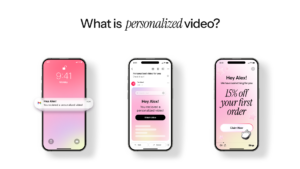
What is Smart Video?

Smart Video is video that assembles itself for each individual viewer at the moment they open it, using data the brand already has, rather than being one fixed file everyone watches identically. Where a normal video is the same for everyone, a Smart Video reflects who is watching: their name, their history, their preferences, their next best step.

The simplest way to picture it: a normal video is like a printed poster, identical for every person who walks past. A Smart Video is like a screen that changes what it shows based on who is standing in front of it. Same frame, different content per person, decided in the instant.

How does Smart Video actually work?

Two ideas make Smart Video possible, and both have plain-language explanations.

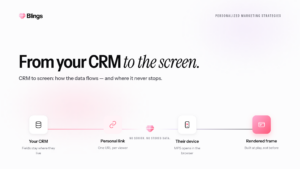
On-demand generation means the video is built the moment the viewer opens it, rather than produced and saved in advance. Nothing is pre-made per person. The brand creates one master template, and each viewer’s version is generated fresh when they press play, pulling their data in at that instant.

The moment of open is the exact instant the viewer opens the message and the video assembles, which is why the content is always current. If the customer’s points balance or their local store changed since the email was sent, the Smart Video reflects the new value, because it was not built until they opened it.

Together these mean the brand maintains one template, not millions of files, and every viewer gets a current, personal version. For a deeper look at why this architecture matters, see AI video personalization in 2026: why architecture matters more than the algorithm.

How is Smart Video different from a normal video?

The differences are practical, and they are the reason marketers care.

  • Personalized, not generic: a Smart Video reflects the individual viewer; a normal video is identical for everyone
  • Current, not frozen: a Smart Video shows the latest data at the moment of open; a normal video shows whatever was true when it was made
  • Interactive, not passive: a Smart Video can let the viewer tap, choose, and respond; a normal video only plays
  • One template, not many files: a Smart Video serves the whole audience from a single master; a normal personalized approach needs a separate file per person
  • Measurable, not opaque: a Smart Video reports who watched, how long, and what they did; a normal video embedded in email tells you almost nothing

What can marketers do with Smart Video?

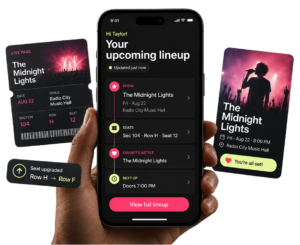
The use cases map to the moments where personalization matters most. A year-in-review recap that shows each customer their own year. A loyalty update that shows the customer their real points and the reward they can claim. An abandoned-cart reminder that shows the exact items left behind. An onboarding welcome that reflects the customer’s signup. A win-back offer with a live countdown.

Real brands run all of these today. Wyndham used a Smart Video recap to lift email click-through by 75%. See the Wyndham case study. Live Nation VIP produced a 16.6% share rate and 82 seconds of average watch time on a 40-second video. See the Live Nation VIP case study. Habit Burger Grill lifted loyalty signups by 47%. See the Habit Burger Grill case study.

Do I need a technical team to use Smart Video?

No. The whole point of the Smart Video approach is that the marketer builds and runs the campaign using the customer data already in the CRM. Blings connects natively to the tools marketers already use, Salesforce, HubSpot, Braze, Iterable, and Klaviyo, so the Smart Video pulls its data from where it already lives. The creative is built once as a template, and the personalization happens automatically per viewer. For the underlying technology, see the MP4 is dead.

FAQ

What is Smart Video in simple terms?

Smart Video is video that builds itself for each individual viewer at the moment they open it, using data the brand already has, instead of being one fixed file everyone watches identically. It reflects who is watching, in the instant they watch.

What does on-demand generation mean?

On-demand generation means the video is built the moment the viewer opens it rather than produced and saved in advance. The brand keeps one master template, and each viewer’s personal version is generated fresh when they press play.

How is Smart Video different from personalized video?

They are closely related; Smart Video is the plain-language name for the category. What distinguishes it is that the video assembles on demand at the moment of open from a single template, so it is current, personal, interactive, and measurable, all at once.

Do marketers need engineers to use Smart Video?

No. Marketers build and run Smart Video campaigns using the customer data already in their CRM, through native integrations with tools like Salesforce, HubSpot, Braze, and Klaviyo. The creative is a template built once, and personalization happens automatically.

The takeaway

Smart Video is the plain word for video that assembles itself for each viewer at the moment of open, using data the brand already has. It is personal where normal video is generic, current where normal video is frozen, and measurable where normal video is opaque, all from a single template rather than millions of files. Wyndham, Live Nation VIP, and Habit Burger Grill all run Smart Video today with results a normal video could not produce.

If your brand has customer data and a CRM, Smart Video is within reach without an engineering team. It is the difference between a video that plays and a video that knows who is watching.

Your customers are waiting for great video experiences.

Schedule a custom demo